
Secure Payments
Your security comes first. All our payment methods follow PCI standards and support 3D Secure authentication for safe checkout.

Couldn't load pickup availability
Plant Description
Rubus fruticosus cv. CHESTER is a striking cultivar known for its thornless canes and abundant fruit production. This thornless blackberry offers an excellent combination of ornamental beauty and edible value. Gardeners appreciate Rubus fruticosus CHESTER for its vigorous growth and the rich flavor of its berries. Its European origin gives it a classic appeal in temperate gardens.
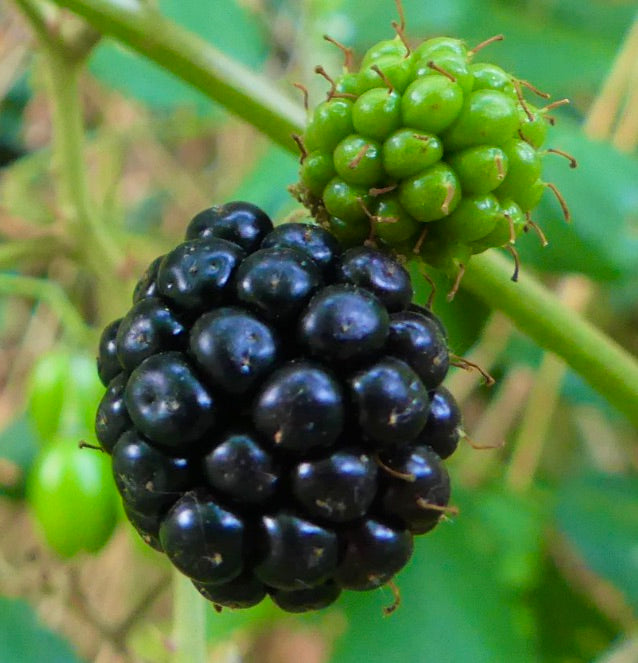
The blackberry features dark green leaves that contrast beautifully with its glossy, black fruits. The bramble produces clusters of sweet berries that attract wildlife and delight fruit lovers alike. The European blackberry is valued for its robust canes, which remain free of thorns, making harvesting safer and easier. Rubus fruticosus CHESTER stands out as a practical and decorative choice.
Overall, Rubus fruticosus cv. CHESTER combines the best traits of a thornless blackberry with the attractive look of a bramble. This cultivar enriches gardens with its ornamental foliage and delicious fruit. Its thornless feature adds convenience, making it a top choice among blackberry enthusiasts and gardeners alike. Experience the charm and bounty of Rubus fruticosus CHESTER in your green space.
IMPORTANT: The pictures show the mother plant, which is not for sale. The offer includes a plant with the dimensions stated in the description.
Botanical family: Rosaceae
Botanical genus: Rubus
Botanical species: Rubus fruticosus
SKU:BA-1218-S-2
Soil type: Well-drained, fertile soil rich in organic matter; slightly acidic to neutral pH.
Watering frequency: Regular watering, especially during fruiting; keep soil consistently moist but not waterlogged.
Light exposure: Full sun for optimal fruiting and plant health.
Temperature requirements: Tolerates temperatures from -20°C to 30°C (-4°F to 86°F).
Fertilization: Apply balanced fertilizer in early spring; supplement with potassium during fruiting.
Pruning: Prune old canes after fruiting and train new growth on supports for better airflow and sun exposure.
Common pests: Watch for aphids, spider mites, and cane borers; use organic pest control when necessary.
Plant Height:
Plant Diameter:
Pot Size:
Grafted/Not Grafted:
Disclaimer: Be aware that most plants change across seasons. If present foliage, could have been fallen or change in its color.
Your security comes first. All our payment methods follow PCI standards and support 3D Secure authentication for safe checkout.
Our customer support is available Monday to Saturday from 9:00 AM to 6:00 PM (European time).
Our products travel in professional, eco-friendly packaging made from recycled materials, ensuring safe delivery.
We ship worldwide with full tracking. A Phytosanitary Certificate is provided for all exports outside the EU.