
Aristolochia
-
Aristolochia gigantea
Regular price From €19,00 EURRegular price€22,00 EURSale price From €19,00 EURSale -
Aristolochia durior
Regular price From €78,00 EURRegular price


Collection: Aristolochia
The Exotic Appeal of Aristolochia (Dutchman's Pipe)
Dutchman’s Pipe
The Dutchman’s Pipe, scientifically identified as Aristolochia, is renowned for its unusual pipe-shaped flowers that inspired its common name. This climbing genus belongs to the Aristolochiaceae family and includes species distributed across tropical, subtropical, and temperate regions. Its vigorous growth habit and dense foliage make it highly valued for providing natural shade in gardens and green spaces, where it creates cool, sheltered areas for people and wildlife alike.
Beyond its ornamental appeal, Aristolochia contributes ecologically by supporting diverse insect communities and offering shelter to small animals. In traditional landscapes, it often grows along fences, pergolas, or walls, where its twining stems can rapidly cover large surfaces.

Aristolochia Gigantea
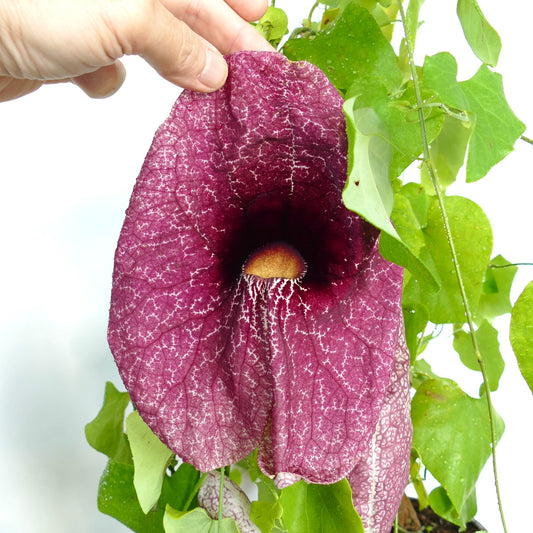
The Aristolochia gigantea is one of the most remarkable representatives of the genus, recognized for its enormous flowers that can exceed 30 centimeters in length. These blossoms display intricate veining and mottled patterns, resembling exotic textiles. Native to Brazil, this species favors humid, tropical environments where temperatures remain consistently warm. Its climbing stems require solid support structures such as trellises, arches, or pergolas, enabling the large flowers to hang prominently and maximize visibility.
Although visually striking, the flowers emit a strong scent designed to attract specific pollinators. This adaptation exemplifies the intricate relationship between Aristolochia species and their ecological partners.
Pipevine and Pollinators
The pipevine plays a crucial role in sustaining pollinators and herbivorous insects. Most notably, it is the primary host plant for the pipevine swallowtail butterfly (Battus philenor). Adult butterflies lay their eggs on the leaves, which then serve as food for the developing larvae. The plant’s chemical compounds, while toxic to many animals, provide the caterpillars with defensive properties against predators.
Additionally, the flowers of several Aristolochia species use trap mechanisms to temporarily confine insects. This ensures efficient pollination before releasing them, illustrating a unique evolutionary strategy for reproduction.
- Essential host plant for the pipevine swallowtail butterfly
- Flowers use trap-pollination strategies to ensure fertilization
- Dense foliage provides shade and shelter in gardens
- Contains defensive compounds deterring herbivores
- Supports ecological interactions between insects and plants
Care Tips for Aristolochia
Cultivating Aristolochia requires attention to light, soil, and space. These plants prefer fertile, well-drained soils that retain some moisture without becoming waterlogged. Full to partial sunlight encourages abundant flowering, while sheltered spots protect tender species from excessive wind. Moderate but consistent watering helps maintain healthy growth, especially during active summer months.
Regular pruning controls its rapid expansion, prevents overcrowding, and stimulates new flowering stems. Owing to its vigorous climbing nature, Aristolochia is particularly effective for covering pergolas, trellises, or unsightly structures, combining ornamental elegance with ecological significance in diverse landscapes.

Other Collections in the Archive
-

Specimen Plants
Specimen Plants in our Store Specimen Plants captivate plant enthusiasts with their...
-
Catalogue Plants
Catalogue plants provide a wide variety of options to elevate your garden...
-

Gardening Tools & Soils
Gardening tools – essentials for healthy soils and thriving plants Building a...


