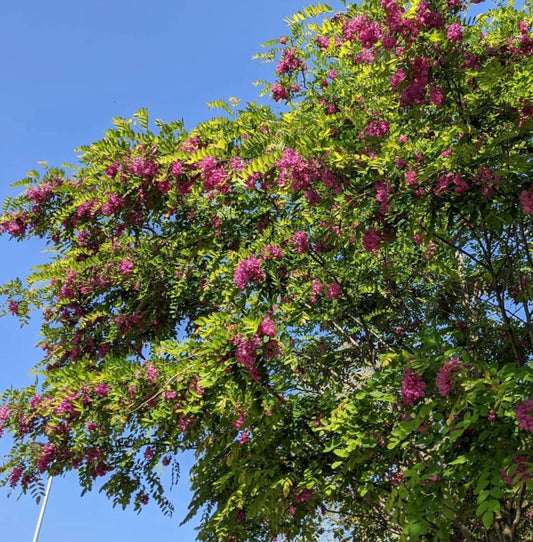
Collection: Robinia
Robinia: The Hardy and Fast-Growing Leguminous Tree Genus
The Robinia genus belongs to the Fabaceae family and includes deciduous trees and shrubs renowned for their rapid growth, fragrant flowers, and ability to fix nitrogen in the soil. Native primarily to North America, these plants play important ecological roles and have been widely introduced to other temperate regions worldwide. Among the most notable species are Robinia pseudoacacia (commonly known as Black Locust) and Robinia hispida, each exhibiting distinct botanical and ecological characteristics.
What is Robinia?
Robinia species typically grow as medium-sized trees or shrubs with pinnate leaves composed of multiple leaflets. Their flowers are usually fragrant, pea-shaped, and arranged in pendulous clusters, attracting various pollinators such as bees and butterflies. These trees have specialized root nodules that host nitrogen-fixing bacteria, enabling them to enrich poor soils and improve fertility. Ecologically, Robinia contributes to habitat restoration and supports biodiversity by providing nectar and shelter for wildlife.
How to Grow and Care for Robinia
These trees thrive best in well-drained soils under full sunlight. They tolerate drought and poor soil conditions, including sandy or rocky substrates, due to their adaptive root systems. Although Robinia requires minimal maintenance, regular pruning encourages healthy growth, controls spreading through root suckers, and maintains structural integrity by removing brittle branches. Their resilience makes them suitable for urban and rural settings alike.
Typical care considerations include:
- Planting in areas with good air circulation to reduce disease risks.
- Monitoring for root suckers that can lead to unwanted spread.
- Protecting young plants from excessive frost or strong winds.
- Ensuring adequate space for root expansion.
- Applying mulch to conserve soil moisture during dry periods.
Robinia in Landscaping and Environmental Uses
Due to their rapid growth and nitrogen-fixing capabilities, Robinia species are valuable for various environmental applications. They are commonly used in reforestation projects to rehabilitate degraded lands and stabilize soils against erosion. Additionally, they serve as effective windbreaks and provide shade in parks and gardens. Their fragrant flowers support pollinator populations, enhancing local ecosystems and promoting wildlife-friendly habitats.
Common Issues and Maintenance Tips
While generally resistant to many diseases, Robinia trees can face challenges such as the development of brittle branches, which may pose safety concerns. Root suckering is another issue, as it can lead to invasive growth outside the intended planting area. Proper site selection and consistent pruning mitigate these problems. Some species have invasive tendencies in non-native regions, so managing their spread is essential to protect local biodiversity.

 Sold out