
Denmoza
-

 Sold out
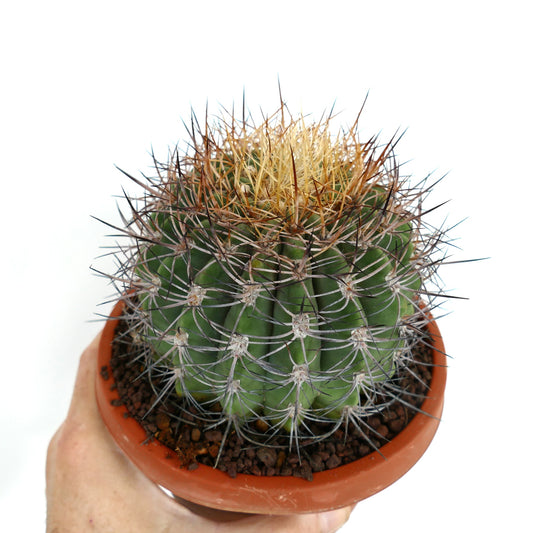
Denmoza erythrocephala
Regular price €48,50 EURRegular price -
Denmoza rhodacantha
Regular price From €22,00 EURRegular price


Collection: Denmoza
Denmoza: A Unique Cactus Genus
The Denmoza genus, particularly known for its striking Denmoza rhodacantha, is a captivating group of cacti native to Argentina.
Originating from the dry, rocky slopes of the eastern Andes in Argentina, the Denmoza genus stands out in the cactus world for its combination of architectural form, slow development, and seasonal vibrancy. The name “Denmoza” is an anagram of Mendoza, the region where the genus was first identified—underscoring its deep geographic ties.
Characterized by a globular to columnar shape, thick ribs, and a dense arrangement of spines, Denmoza species represent a perfect balance between symmetry and wild desert character. Their spines can vary in color from golden brown to reddish hues, intensifying as the plant matures. With age, many specimens develop a woolly crown from which large, tubular flowers emerge in summer. These scarlet to orange-red blossoms are pollinator magnets and are often held upright, adding further vertical emphasis to the plant’s silhouette.
Collectors appreciate the genus for its ability to change slowly over time—requiring patience but offering tremendous visual reward. Whether grown in containers or rock gardens, these plants become sculptural focal points that speak to the stark beauty of South American deserts.

Denmoza Rhodacantha: A Collector's Favorite
The Denmoza rhodacantha is celebrated for its robust structure and eye-catching red or orange blooms. This species thrives in well-drained soil with plenty of sunlight, making it ideal for both indoor collections and outdoor gardens in arid climates.
One of the most recognizable members of the genus, Denmoza rhodacantha begins life as a rounded, almost barrel-shaped cactus. As it ages—sometimes over decades—it may elongate into a more columnar form, reaching up to 1.5 meters in height in ideal conditions. Its name, “rhodacantha,” refers to the reddish nature of its spines, which grow in clusters along the well-defined ribs.
When in bloom, this cactus produces vivid, trumpet-shaped flowers that are typically a bright crimson or fiery orange. Unlike some other genera, the blooms emerge directly from the areoles near the apex, often standing vertically like torches. These brilliant flowers contrast dramatically against the gray-green body of the plant and can appear multiple times during the growing season if conditions are favorable.
Whether grown in an open desert bed or a deep clay pot, this species brings verticality, texture, and seasonal drama to any collection. Its slow growth makes it manageable for container culture, and its resilience in harsh conditions has made it a staple among arid plant growers worldwide.
Caring for Denmoza Cacti
Denmoza cacti require minimal maintenance. Plant them in a sandy or rocky substrate, water sparingly, and ensure good airflow to prevent rot. These resilient plants are perfect for beginners and experienced gardeners alike, offering beauty and longevity.
Like many desert-adapted species, Denmoza prefers a sharply-draining medium composed of mineral grit, coarse sand, and minimal organic matter. The roots are sensitive to excess moisture, and pots should always include drainage holes. In colder climates, plants should be overwintered in bright, dry spaces where temperatures do not fall below 5°C (41°F).
During the active growing season—from spring to early autumn—light watering every two to three weeks is sufficient. The soil should dry completely between waterings. In winter, reduce water to near-zero levels to prevent root rot and encourage dormancy.
While these cacti can survive with minimal feeding, occasional application of a low-nitrogen cactus fertilizer during the growing season supports flower production and overall vitality. Strong light is crucial: full sun encourages compact growth and helps maintain spine color and density. Good ventilation is also important, particularly in humid regions, to avoid fungal issues.
Their low-maintenance nature and resistance to common pests make them an excellent choice for growers looking to start or expand a collection without intensive upkeep. They’re especially suited to collectors who appreciate slow, deliberate development over flashy, fast-growing species.
Exploring Denmoza Varieties
From the classic Denmoza rhodacantha to its variant Denmoza rhodacantha v. diamantina, these cacti add texture and intrigue to any space. Their symmetrical growth and vibrant flowers make them a standout in any cactus collection.
Though the genus is relatively small, the diversity within Denmoza rhodacantha and its varieties is quite notable. The form “v. diamantina” is particularly appreciated for its refined rib structure and sometimes slightly brighter spines, giving it a more ornamental appearance. Other forms may exhibit regional differences in flower color, spine thickness, or overall body shape—details that collectors love to explore and compare.
When planted among other South American genera like Eriosyce, Gymnocalycium, or Copiapoa, Denmoza offers a textural contrast that enhances the visual richness of cactus groupings. Its upright stature and deliberate pace of growth make it a balancing element in any composition—serving as a vertical anchor to more sprawling or globular species nearby.
Even in non-flowering stages, the strong geometry of its ribs and the dense pattern of spines contribute to its ornamental value. Over time, mature plants may develop a slightly woody base or corking near the lower ribs, adding further to their rugged charm.
With their adaptability and striking appearance, Denmoza cacti are a must-have for anyone looking to add a touch of desert charm to their plant collection. Whether showcased alone or in curated groupings, they embody the sculptural beauty and endurance of arid flora.
Other Collections in the Archive
-

Specimen Plants
Specimen Plants in our Store Specimen Plants captivate plant enthusiasts with their...
-
Catalogue Plants
Catalogue plants provide a wide variety of options to elevate your garden...
-

Gardening Tools & Soils
Gardening tools – essentials for healthy soils and thriving plants Building a...


