The Beauty and Versatility of Acacia
Acacia
Acacia is a captivating plant known for its strength and resilience, widely appreciated for its aesthetic and functional qualities.
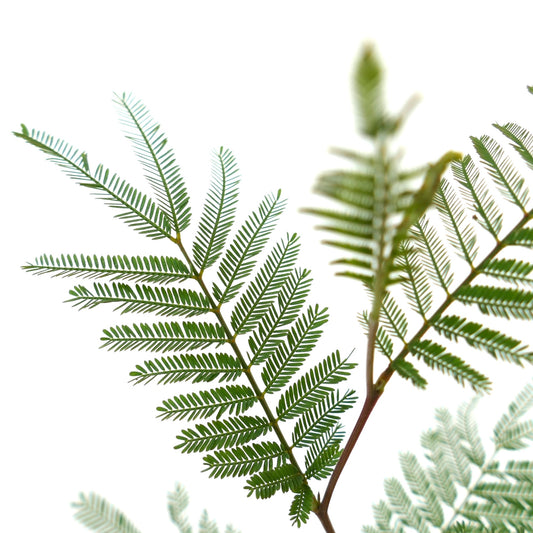
Belonging to the Fabaceae family, Acacia encompasses hundreds of species found across Africa, Australia, and parts of the Americas. These trees and shrubs are known for their feathery leaves, fragrant flowers, and thorny or smooth branches, depending on the species. The fast-growing nature of Acacia makes it an ideal choice for erosion control, land restoration, and ornamental landscaping. Its ability to fix nitrogen in the soil also supports nearby plants and contributes to soil health, making it both beautiful and ecologically valuable.
Mimosa and Robinia
The mimosa and robinia belong to the legume family and share many characteristics with Acacia.
Mimosa, often confused with Acacia due to its similar appearance, is especially admired for its soft, yellow, puffball-like flowers that bloom in late winter to early spring. It is frequently associated with early spring festivities, particularly Women's Day in Italy and other countries. Its visual delicacy hides a plant that is surprisingly hardy and well-suited for Mediterranean and temperate climates.
Robinia, commonly known as black locust, is a deciduous tree with compound leaves and clusters of fragrant white flowers. It is especially valued for its durable hardwood, which is used in carpentry, fencing, and even boatbuilding. Like Acacia, it thrives in poor soils and has the capacity to regenerate quickly, often forming dense groves.
Acacia honey
Acacia honey is one of the most loved products due to its delicate flavor and beneficial properties.
Derived from the nectar of Acacia flowers, particularly those of Acacia dealbata and Robinia pseudoacacia, this honey is light in color, with a mild, floral taste that makes it ideal for both culinary and therapeutic uses. Its high fructose content prevents rapid crystallization, which gives it a long shelf life and a smooth texture. Acacia honey is often used in herbal remedies due to its soothing, antibacterial, and antioxidant properties. In cooking, it is preferred as a sweetener for teas, yogurts, desserts, and dressings, where its subtle aroma enhances flavor without overpowering other ingredients.
Cultivation and Uses
Growing Acacia is straightforward and requires minimal care, making it an excellent choice for both experts and beginners.
Most species prefer full sun and well-drained soil, tolerating drought once established. Regular but moderate watering helps young plants develop strong root systems. In colder regions, some species may need protection during winter. Pruning encourages better form and flowering in ornamental settings.
In addition to its decorative appeal, Acacia is widely used for timber, paper pulp, and natural dyes. The bark of some species contains tannins used in leather tanning. In arid environments, Acacia species like Acacia tortilis play a critical role in supporting biodiversity by providing shade, shelter, and food for animals. Its adaptability to degraded or marginal lands has made it a preferred species for reforestation and sustainable agriculture. The soft, airy blooms also attract pollinators such as bees, further boosting the ecological value of this remarkable genus.


 Sale
Sale