Discover the Unique Beauty of Hildewintera Cacti
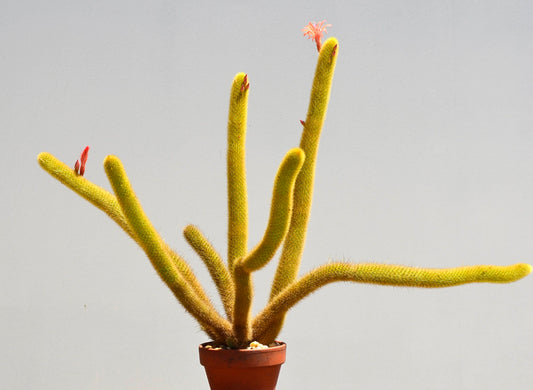
The Hildewintera genus, commonly referred to as the Monkey Tail Cactus (Hildewintera colademononis), comprises striking succulent plants known for their distinctive trailing stems and vibrant flowers. Native to the arid regions of Bolivia, these cacti have adapted to survive in harsh environments with minimal water by developing thick, fleshy stems covered with dense, soft spines that protect them from herbivores and intense sunlight. Their trailing growth habit allows them to spread over rocky surfaces or cascade from hanging containers, making them popular in ornamental horticulture.
Hildewintera: The Monkey Tail Cactus
These cacti exhibit cylindrical, elongated stems that can reach lengths of up to 1 meter, covered with clusters of golden or silvery spines that give a furry appearance, hence the common name "Monkey Tail." Their nocturnal flowers, usually pale pink or white, bloom in spring and summer, attracting nocturnal pollinators such as moths and bats. Ecologically, Hildewintera species contribute to their native ecosystems by providing nectar resources and habitat structure for various insects and small animals.
Caring for Hildewintera Cacti
Hildewintera cacti thrive in well-drained, sandy or rocky soils that mimic their natural habitats. They require abundant sunlight but benefit from some protection against the hottest midday sun to prevent tissue damage. Watering should be moderate during the growing season, allowing the soil to dry out between sessions, while in winter, watering must be minimal to avoid root rot. These plants also prefer warm temperatures and good air circulation, which helps prevent fungal diseases. Varieties such as Hildewintera aureispina and Hildewintera amethystina demonstrate resilience to varying conditions and display unique spine coloration and flower hues, making them attractive for collectors and enthusiasts.
Why Choose Hildewintera for Your Collection
Ideal for both novice and experienced succulent growers, Hildewintera cacti add a distinctive texture and form to plant collections. Their trailing stems create dramatic visual interest in hanging baskets or elevated pots, while their blooms enhance biodiversity by attracting pollinators. Moreover, their adaptability to indoor cultivation under bright light conditions makes them suitable for various environments. These plants also play a role in educating about xerophytic adaptations and desert ecology.
Popular Varieties of Hildewintera
The genus includes several notable species, each with unique features that appeal to botanical enthusiasts. For example, Hildewintera colademononis is prized for its long, soft golden spines and profuse flowering, whereas Hildewintera aureispina exhibits striking golden spines contrasting with dark green stems. Hildewintera amethystina stands out with its subtle purple-toned flowers. These varieties can grow both indoors and outdoors, provided their environmental needs are met.
- Trailing stems covered with dense, soft spines
- Nocturnal flowers attracting specific pollinators
- Adaptations to arid, rocky habitats
- Suitable for hanging baskets and rock gardens
- Varied spine colors and flower hues across species
Collectively, Hildewintera species offer a fascinating glimpse into cactus diversity and ecological specialization.