Titanopsis: The Unique Mimicry Succulents
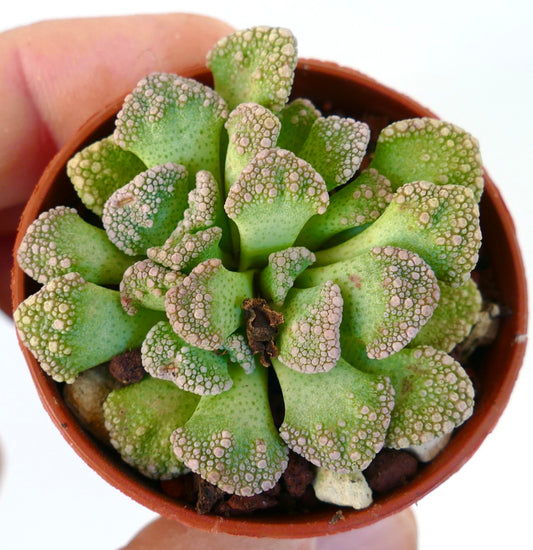
The Titanopsis genus includes a remarkable group of succulent plants that exhibit exceptional mimicry, allowing them to blend perfectly into their rocky habitats. These succulents display textured, stone-like leaves that help them avoid herbivory and thrive in harsh environments. Their ability to resemble the surrounding stones serves as a critical adaptation for survival in arid regions.
Popular Species: Titanopsis Calcarea
One of the most notable species, Titanopsis calcarea, is often called the "concrete leaf succulent" because of its chalky, rough-textured leaves that appear like small pieces of rock. This species shows intricate coloration, including tones of gray, green, and beige, which enhances its camouflage. It adapts well to indoor pots and rock gardens, requiring minimal watering and well-draining soil to prevent root rot.
Mimicry Plants and Their Unique Traits
Members of the Titanopsis genus, such as Titanopsis luederitzii, demonstrate an extraordinary form of natural mimicry. Their leaves mimic the appearance of the rocky surfaces where they grow, making them difficult to spot by predators. This adaptation also helps reduce water loss by minimizing exposure to direct sunlight and wind. The plants have rosettes of thick, fleshy leaves covered with tubercles, which further enhance their stone-like appearance.
These succulents inhabit semi-arid to arid regions, primarily in South Africa, where they grow in rocky outcrops and gravelly soils. They contribute ecologically by stabilizing soil and providing microhabitats for small insects and microorganisms.
Care and Cultivation
Titanopsis succulents flourish in well-draining, gritty soil mixtures that mimic their natural rocky terrain. They require bright but indirect sunlight to maintain their compact growth and vibrant leaf colors. Watering should be infrequent; allow the soil to dry completely between watering sessions to prevent fungal diseases. These plants are well-suited to xeriscaping and can tolerate drought conditions, making them ideal for dry climates.
For successful cultivation, consider the following care points:
- Use sandy or gravelly soil to ensure proper drainage
- Provide filtered sunlight or partial shade
- Water sparingly, especially during dormancy
- Protect from frost and excessive humidity
- Repot every few years to refresh the soil
Decorative and Ecological Benefits
Besides their unique aesthetic appeal, Titanopsis succulents offer ecological benefits by adapting to and thriving in harsh environments where few plants can survive. Their presence contributes to biodiversity in arid ecosystems and supports soil health by preventing erosion. These succulents also serve as host plants for certain insects, creating small ecological niches.
Their distinctive stone-like appearance makes Titanopsis an intriguing addition to both indoor and outdoor botanical collections, where they inspire curiosity and appreciation for natural adaptation strategies.