Collection: Alnus
Alnus: The Versatile Alder Tree
The Alnus genus, known commonly as alder trees, encompasses a diverse group of species valued for their ecological roles and ornamental qualities. Species like Alnus glutinosa (black alder) and Alnus rubra (red alder) thrive in various environments, serving both practical functions and enhancing landscape aesthetics. These trees adapt well to riparian zones, where they contribute significantly to ecosystem stability.
Ecological and Ornamental Value
Alders, including species such as Alnus incana and Alnus serrulata, play a critical role in stabilizing riverbanks and enriching soil fertility through nitrogen fixation. This process supports other plant life by improving nutrient availability. Additionally, species like Alnus cordata (Italian alder) are appreciated for their rapid growth and elegant form, making them suitable for both natural restoration and ornamental planting. Alders also serve as habitat and food sources for various wildlife, including insects and birds, further emphasizing their ecological importance.
Care and Cultivation
Growing an Alnus plant is relatively simple since these trees prefer moist, well-drained soils commonly found along waterways and wetlands. Their resilience allows species such as Alnus glutinosa imperialis and Alnus japonica to withstand a range of climatic conditions, demonstrating adaptability to different soil types and moisture levels. Due to their low maintenance requirements, they are frequently used in reforestation and landscaping projects aimed at soil stabilization and biodiversity enhancement.
Unique Features
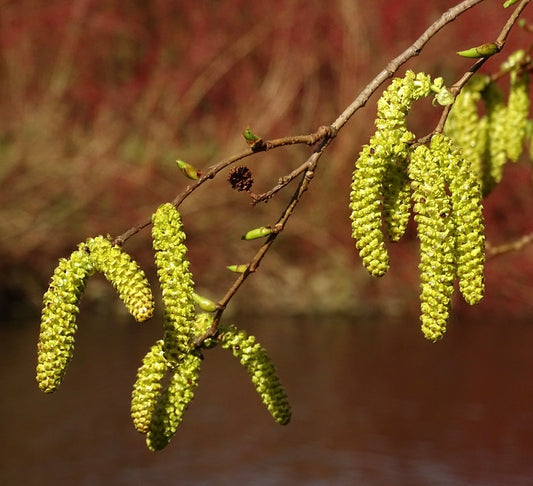
Alders display distinctive morphological traits, including serrated alnus leaves and catkin-like flowers that appear in early spring. For example, the red alder (Alnus rubra) and white alder (Alnus rhombifolia) provide seasonal interest with their foliage and flowering patterns. Their ecological adaptability allows them to colonize disturbed sites efficiently, making them important pioneer species in succession. Furthermore, their symbiotic relationship with nitrogen-fixing bacteria enables them to improve soil conditions, benefiting neighboring plants.
In summary, the Alnus genus merges ecological utility with aesthetic appeal, making these alder trees valuable components in both natural ecosystems and cultivated landscapes. Their ability to support wildlife, stabilize soils, and enhance nutrient cycles highlights their integral role in many temperate environments.
- Distribution includes temperate regions of the Northern Hemisphere, especially near water bodies.
- Adapted to wet soils and capable of colonizing disturbed habitats.
- Leaves are typically simple, serrated, and often glossy, aiding in identification.
- Flowers form as catkins, which facilitate wind pollination.
- Support a variety of wildlife, including specific moth and butterfly species that rely on alders as host plants.