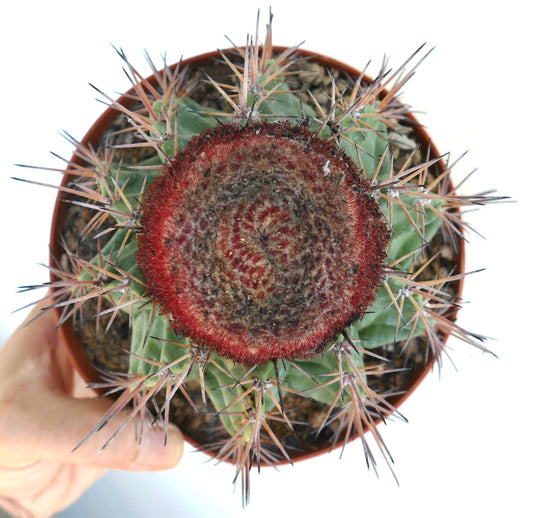
Melocactus
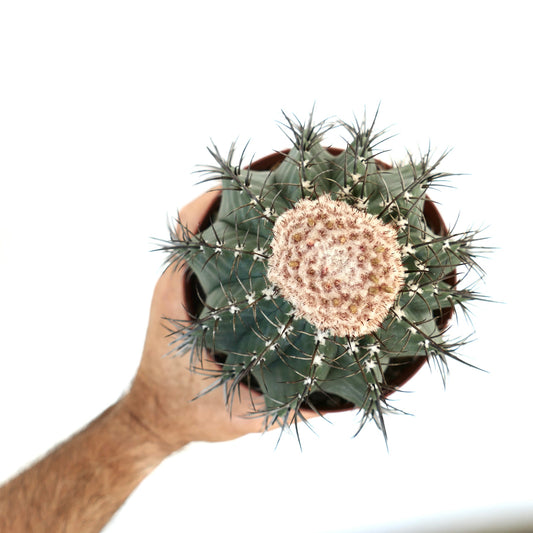
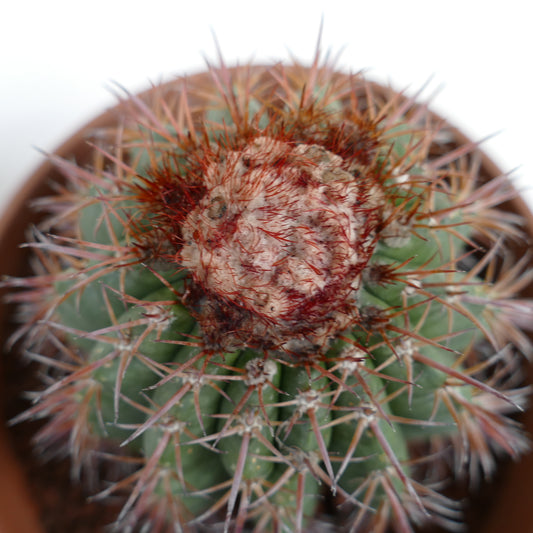
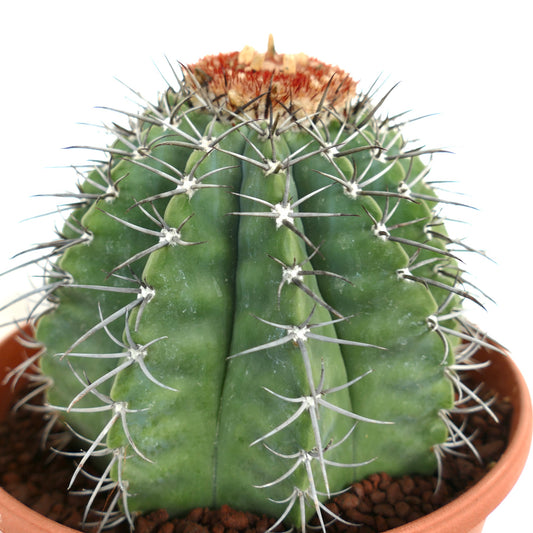
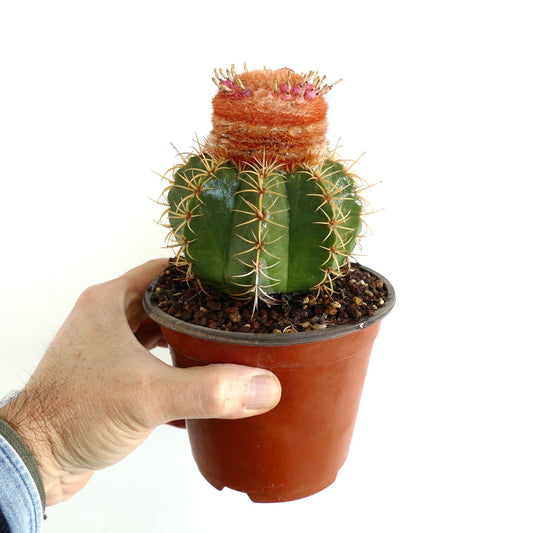
Explore our Melocactus collection, featuring distinctive, globe-shaped cacti known for their unique cephalium—a woolly, red cap that appears on mature plants. Native to the Caribbean and parts of Central and South America, Melocactus species have ribbed bodies with prominent spines, giving them a bold appearance. The cephalium produces small pink or red flowers that emerge in a ring and can later develop into tiny, colorful fruits. Thriving in bright, indirect light, well-draining soil, and minimal watering, Melocactus is ideal for cactus enthusiasts looking to add a unique and exotic element to their collection.
-
Melocactus actinacanthus (Rio Alabama, CUBA) 4cm
Regular price €14,00 EURRegular priceSale price €14,00 EUR -
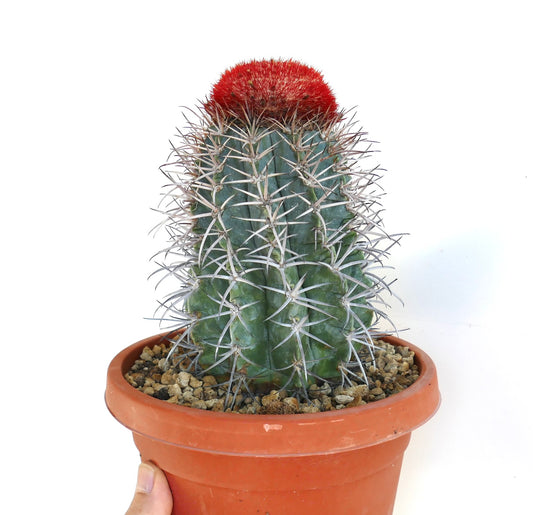
Melocactus azureus OLD SPECIMEN 1Q879
Regular price €95,00 EURRegular priceSale price €95,00 EURSold out -
Melocactus bahiensis subs. amethystinus SELECTED
Regular price €90,00 EURRegular priceSale price €90,00 EUR -
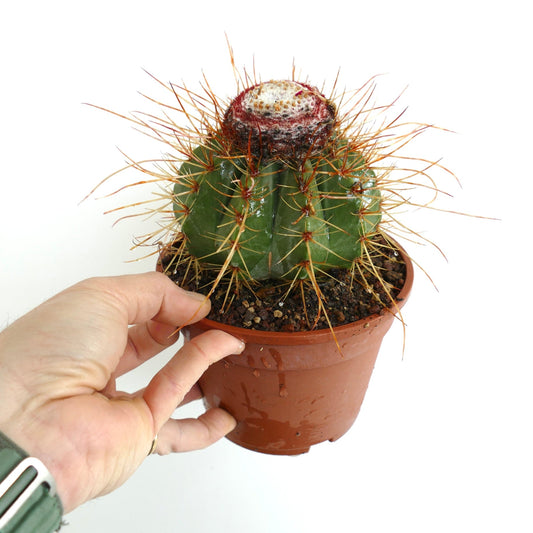
Melocactus curvispinus ssp loboguerreroi
Regular price From €25,00 EURRegular priceSale price From €25,00 EURSold out -
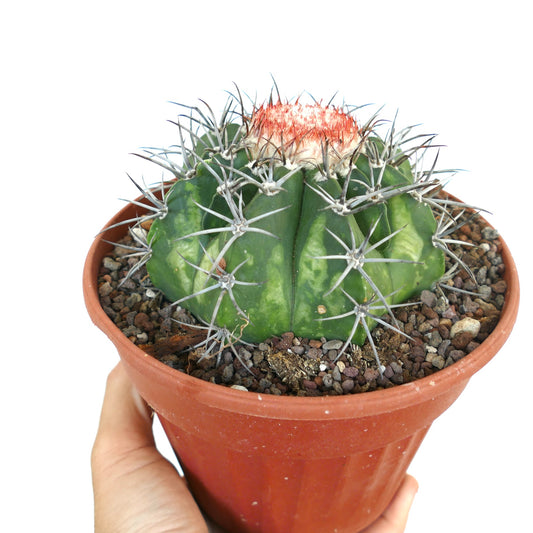
Melocactus glaucescens WHITE CEPHALIUM
Regular price €85,00 EURRegular price€25,00 EURSale price €85,00 EURSold out -
Melocactus glaucescens WHITE CEPHALIUM
Regular price €85,00 EURRegular price€25,00 EURSale price €85,00 EURSold out -
Melocactus glaucescens WHITE CEPHALIUM selected
Regular price €85,00 EURRegular priceSale price €85,00 EURSold out -
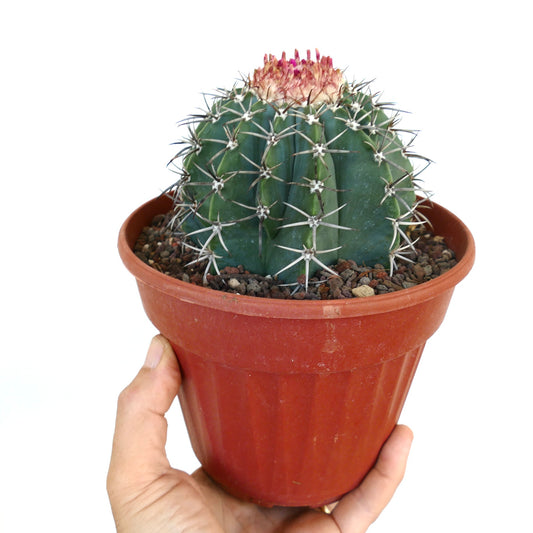
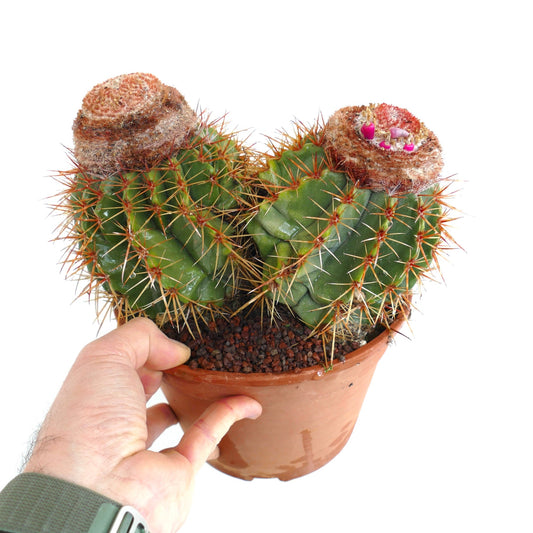
Melocactus matanzanus
Regular price From €8,00 EURRegular priceSale price From €8,00 EUR -
Melocactus nagyi (20km east of Pilon, CUBA)
Regular price €135,00 EURRegular priceSale price €135,00 EUR -
Melocactus specie from Macampo CUBA
Regular price €120,00 EURRegular priceSale price €120,00 EUR
Collection: Melocactus
Melocactus: The Iconic Turk’s Cap Cactus
Melocactus, commonly called the Turk’s Cap Cactus, represents a distinctive genus known for its unique cephalium and striking appearance. This genus belongs to the Cactaceae family and is native to the Caribbean, Central America, and northern South America, where it thrives in arid and semi-arid habitats. These cacti adapt to dry, rocky environments with well-drained soils and high sunlight exposure, often growing in coastal or limestone-rich areas.
Features of the Melocactus Cactus
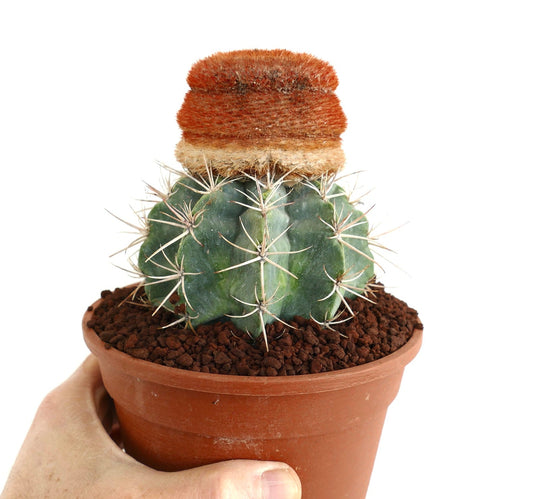
The most notable characteristic of Melocactus is its globular, ribbed stem, which stores water to survive drought conditions. On maturity, it develops a specialized reproductive structure called the cephalium, a dense, woolly, and often brightly colored cap. This cephalium produces small tubular flowers and fleshy fruits, usually pink or red, which attract pollinators such as bees and birds. These fruits play an important ecological role by providing food for local fauna and aiding seed dispersal. Additionally, the cactus’s spines protect it from herbivores and help reduce water loss by shading the surface.
Caring for Melocactus
To cultivate Melocactus successfully, maintain conditions similar to its native habitat. It requires abundant sunlight and warm temperatures, typically above 15°C (59°F). The soil must be porous and well-draining to prevent root rot, a common issue in overly moist conditions. Watering should be moderate during the growing season, allowing the soil to dry out between irrigations, and significantly reduced during dormancy in winter. These cacti are sensitive to overwatering and cold drafts. Because of their slow growth and specific needs, they suit experienced succulent growers who can provide consistent care.
Here are key care points for Melocactus:
- Provide full sun or bright indirect light.
- Use a cactus mix or sandy soil with excellent drainage.
- Water sparingly, especially during winter dormancy.
- Maintain warm temperatures and avoid frost.
- Ensure good air circulation to prevent fungal infections.
Popular Melocactus Varieties
Several species within the genus showcase diverse forms and adaptations. For example, Melocactus azureus stands out with its bluish-green stem and bright red cephalium, native to Brazil’s rocky outcrops. Meanwhile, Melocactus matanzanus, native to Cuba, is valued for its compact size and dense, woolly cephalium, making it well-suited for smaller collections. Other species inhabit various Caribbean islands and mainland regions, each adapting to local microclimates and soil types. This diversity highlights the genus’s evolutionary success across different arid ecosystems.
Overall, Melocactus plays an important role in its native habitats by supporting pollinators and seed dispersers. Its unique morphology and ecological interactions make it a fascinating subject for botanical study and conservation efforts. Observing its growth stages reveals how it balances water storage, reproduction, and protection in harsh environments.
Other Collections in the Archive
-
Specimen Plants
Specimen Plants in our Store Specimen Plants captivate plant enthusiasts with their...
-
Catalogue Plants
Catalogue plants provide a wide variety of options to elevate your garden...
-
Gardening Tools & Soils
Gardening tools – essentials for healthy soils and thriving plants Building a...