
Secure Payments
Your security comes first. All our payment methods follow PCI standards and support 3D Secure authentication for safe checkout.

Couldn't load pickup availability
Plant Description
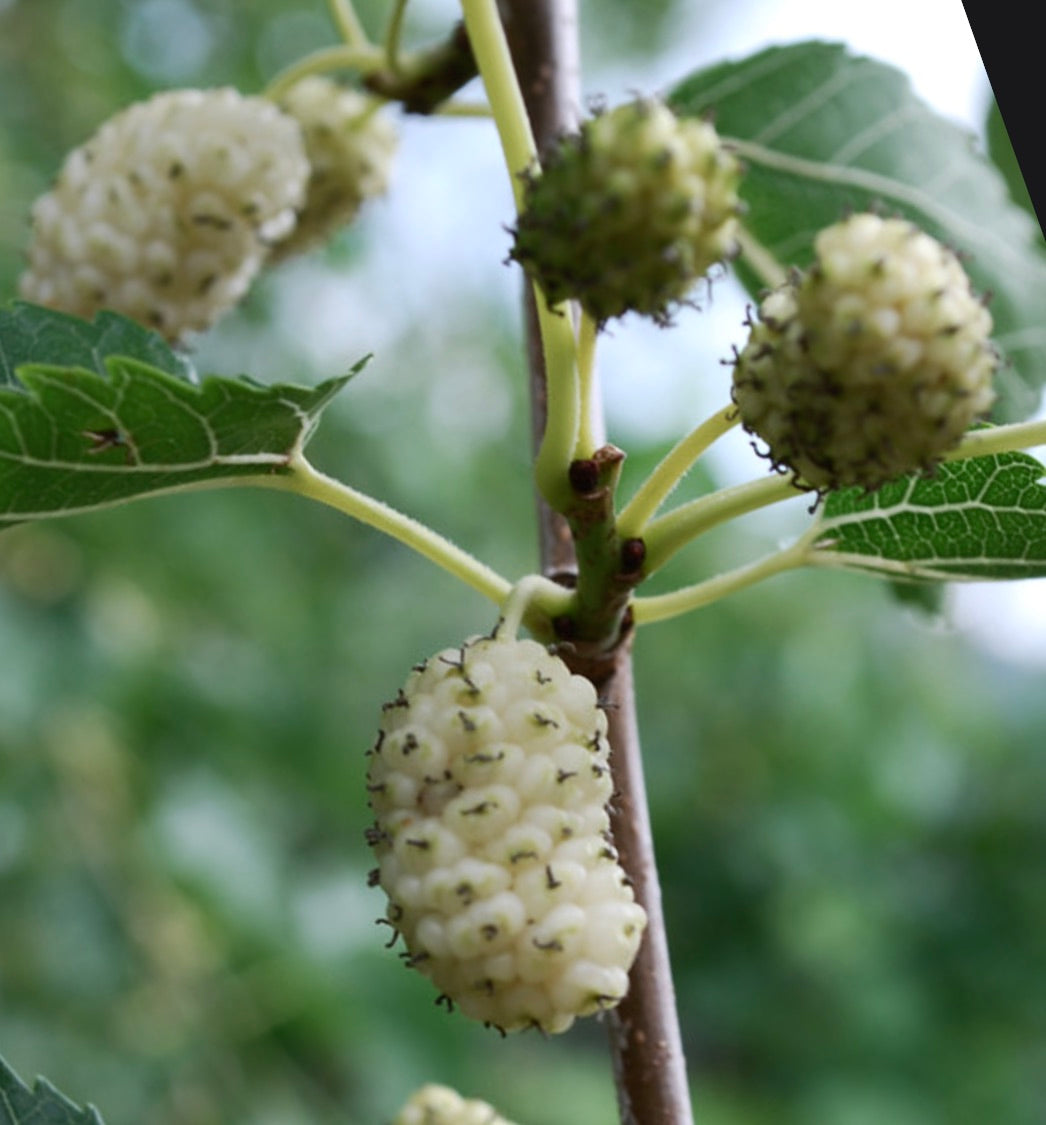
Morus alba stands out as a remarkable species within the Morus genus, widely appreciated for its distinctive white mulberry fruit. This Morus alba tree originates from Asia and thrives in temperate regions, offering a blend of ornamental beauty and practical uses. Gardeners value it for its broad, heart-shaped leaves and its fast growth, which adds lush greenery quickly.
The Morus alba species is especially noted for its edible mulberry, which appears as small, sweet berries ranging from white to pale pink. These fruits attract birds and wildlife, enhancing garden biodiversity. In addition, the Asian mulberry's bark and leaves have historical significance in various cultures, adding depth to its ornamental appeal. Its adaptability makes it a favorite among those looking to add a temperate region mulberry to their landscape.
The white mulberry provides not only beauty but also practical benefits in gardens. As a temperate region mulberry, it fits well in various landscape designs. Its combination of fast growth and attractive fruit makes the Morus alba an excellent choice for both ornamental and ecological purposes. This tree is a true gem among edible mulberry varieties, bringing both charm and functionality to outdoor spaces.
IMPORTANT: The pictures show the mother plant, which is not for sale. The offer includes a plant with the dimensions stated in the description.
Botanical family: Moraceae
Botanical genus: Morus
Botanical species: Morus alba
SKU:BA-0959-S-1
Soil type: Prefers well-draining, loamy soils but tolerates clay and sandy substrates. Slightly acidic to neutral pH is ideal.
Watering frequency: Water regularly during establishment; mature trees are drought-tolerant but benefit from occasional deep watering.
Light exposure: Thrives in full sun; tolerates partial shade but with reduced fruit production.
Temperature requirements: Hardy between -20°C and 35°C (–4°F to 95°F); prefers temperate climates.
Fertilization: Use balanced fertilizer in early spring; avoid high nitrogen blends that reduce fruiting.
Pruning: Best pruned in late winter to maintain structure and encourage airflow; remove suckers and deadwood regularly.
Common pests: Susceptible to whiteflies, aphids, and scale insects; occasional fungal leaf spots.
Other practices: Fruit drop can stain hard surfaces; site appropriately or select fruitless cultivars if mess is a concern.
Plant Height:
Plant Diameter:
Pot Size:
Grafted/Not Grafted:
Disclaimer: Be aware that most plants change across seasons. If present foliage, could have been fallen or change in its color.
Your security comes first. All our payment methods follow PCI standards and support 3D Secure authentication for safe checkout.
Our customer support is available Monday to Saturday from 9:00 AM to 6:00 PM (European time).
Our products travel in professional, eco-friendly packaging made from recycled materials, ensuring safe delivery.
We ship worldwide with full tracking. A Phytosanitary Certificate is provided for all exports outside the EU.