
Secure Payments
Your security comes first. All our payment methods follow PCI standards and support 3D Secure authentication for safe checkout.


Couldn't load pickup availability
Plant Description
The Larix kaempferi, commonly called the Japanese larch, stands out as a striking deciduous conifer native to Japan. This remarkable tree showcases bright green needles that turn vibrant golden-yellow in autumn before shedding. Gardeners appreciate the Larix kaempferi for its elegant, pyramidal shape and delicate needle clusters that add a unique texture to any landscape.
The Larix kaempferi tree thrives as a fast-growing species with a robust trunk and distinctive reddish-brown bark. Experts recognize it as an important larch species native to Japan, widely valued in Larix kaempferi forestry for timber and ornamental purposes. Its resilience and ornamental appeal make it a popular choice in temperate gardens and parks worldwide.
In summary, the Larix kaempferi conifer blends beauty with adaptability. Known also as Kaempfer's larch, this tree enriches landscapes with seasonal color shifts and graceful structure. Its combination of ornamental and forestry value secures its place among prized larch species worldwide.
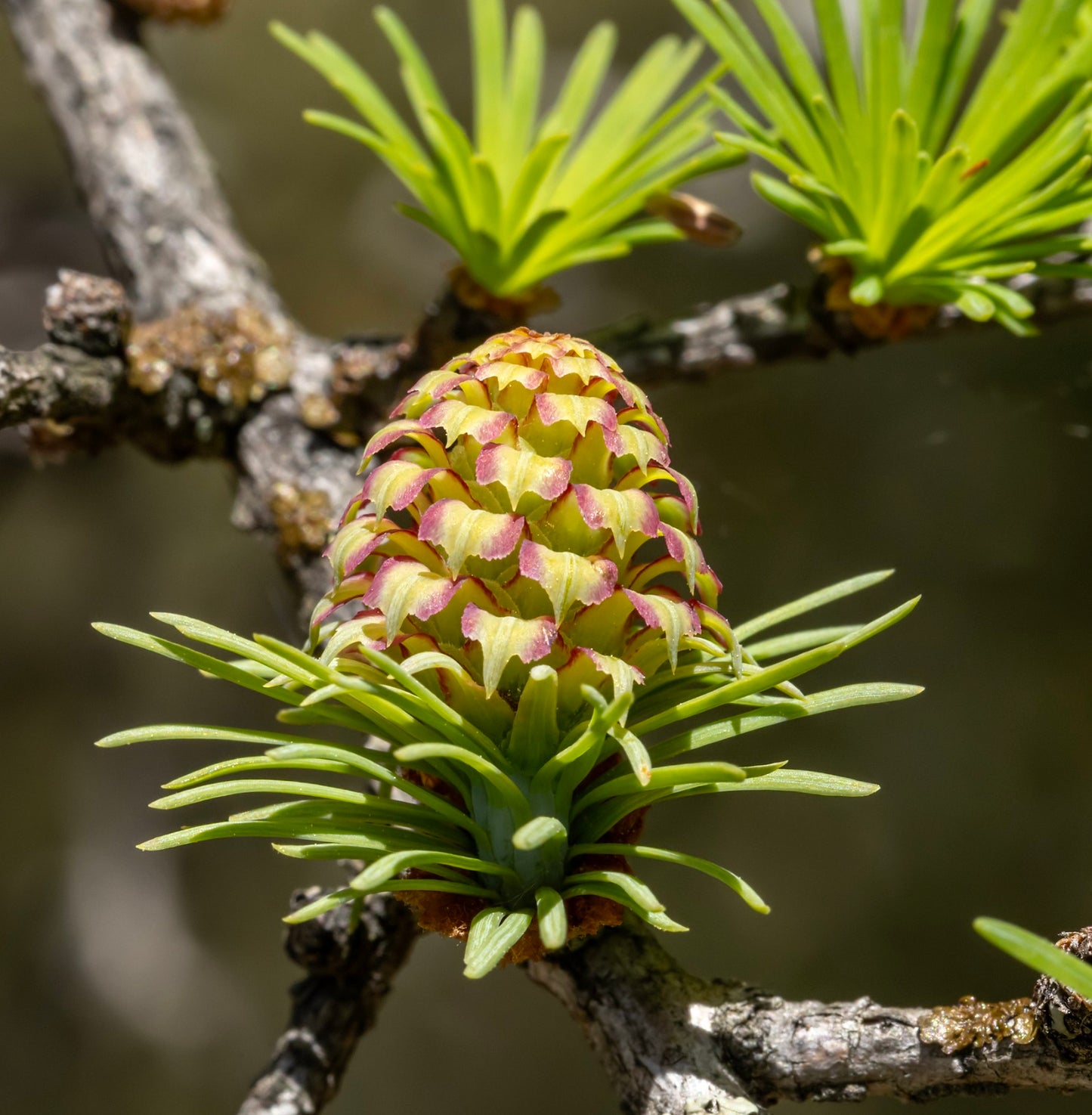
IMPORTANT: The pictures show the mother plant, which is not for sale. The offer includes a plant with the dimensions stated in the description.
Botanical family: Pinaceae
Botanical genus: Larix
Botanical species: Larix kaempferi
SKU:BA-4790-S-1
Soil type: Prefers well-drained, slightly acidic to neutral loamy soils; tolerates sandy and clay soils if drainage is adequate.
Watering frequency: Moderate watering during establishment; drought-tolerant once mature but benefits from consistent moisture in hot climates.
Light exposure: Full sun is essential for optimal growth and foliage color.
Temperature requirements: Thrives in cool to temperate climates; hardy between -40°C to 30°C (-40°F to 86°F).
Fertilization: Apply a balanced slow-release fertilizer in early spring; avoid over-fertilizing to maintain compact growth in bonsai forms.
Pruning: Minimal pruning required; best done in late winter to early spring. Can be pruned regularly when trained as bonsai.
Common pests: Watch for aphids, sawflies, and larch casebearers. Fungal issues may arise in overly wet conditions.
Any other relevant care practices: Mulch around the base to retain soil moisture and suppress weeds. Excellent candidate for bonsai due to its flexible branches and seasonal needle drop.
Plant Height:
Plant Diameter:
Pot Size:
Grafted/Not Grafted:
Disclaimer: Be aware that most plants change across seasons. If present foliage, could have been fallen or change in its color.

Your security comes first. All our payment methods follow PCI standards and support 3D Secure authentication for safe checkout.
Our customer support is available Monday to Saturday from 9:00 AM to 6:00 PM (European time).
Our products travel in professional, eco-friendly packaging made from recycled materials, ensuring safe delivery.
We ship worldwide with full tracking. A Phytosanitary Certificate is provided for all exports outside the EU.