
Secure Payments
Your security comes first. All our payment methods follow PCI standards and support 3D Secure authentication for safe checkout.

Couldn't load pickup availability
Plant Description
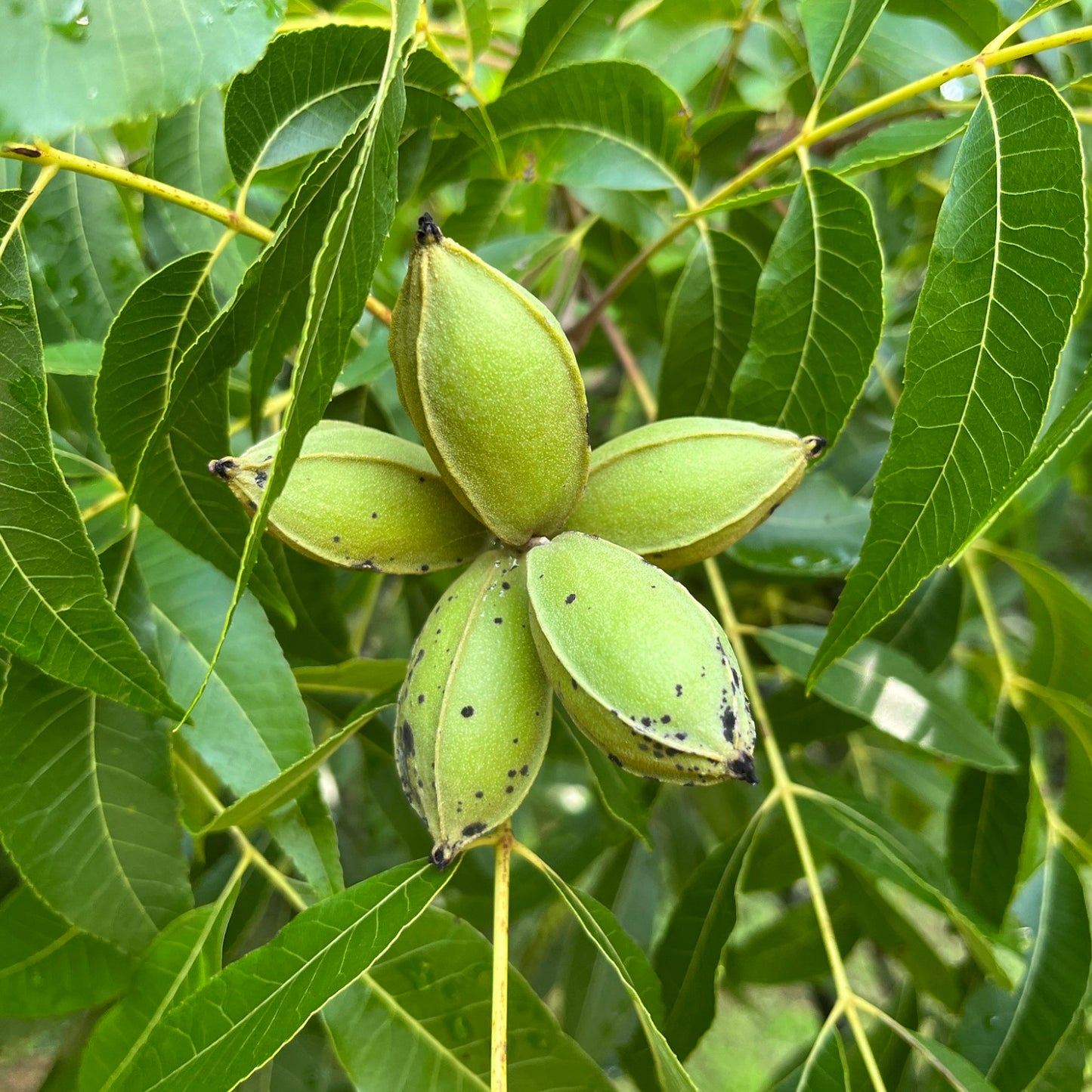
Carya illinoinensis, commonly called the pecan tree, is a majestic native to the central USA. This impressive nut-producing tree captivates with its towering height and rich foliage. Gardeners appreciate its broad pinnate leaves that create a lush canopy. The pecan tree offers both beauty and function, producing delicious nuts treasured in culinary traditions.
The Carya illinoinensis is celebrated as an edible nut species with a unique flavor. Its nuts, known as pecans, are a prized ingredient in many dishes. This tree belongs to the hickory family and produces the valuable hickory nut. Its robust growth and longevity make it a valuable addition to landscapes and orchards.
As a remarkable North American nut tree, the pecan tree holds cultural and ecological significance. It supports wildlife and offers economic value through its nuts. The Carya illinoinensis enriches any environment with its impressive stature and productive yield. For those seeking a beautiful, productive nut-producing tree, this species stands out as a superb choice.
IMPORTANT: The pictures show the mother plant, which is not for sale. The offer includes a plant with the dimensions stated in the description.
Botanical family: Juglandaceae
Botanical genus: Carya
Botanical species: Carya illinoinensis
SKU:BA-0691-S-1
Soil type: Prefers deep, fertile, well-drained loamy soils with slightly acidic to neutral pH. Avoid shallow or compacted soils.
Watering frequency: Requires consistent watering during establishment and fruiting; mature trees tolerate short droughts but benefit from supplemental watering during dry seasons.
Light exposure: Full sun is essential for optimal growth and nut production; needs at least 6-8 hours of direct sunlight daily.
Temperature requirements: Thrives in temperatures between 18°C–32°C (65°F–90°F); dormant trees tolerate down to -9°C (15°F).
Fertilization: Use high-nitrogen fertilizers in early spring; zinc supplementation may be necessary for optimal nut development.
Pruning: Prune in late winter to remove dead or crossing branches and to establish a strong central leader; avoid heavy pruning of mature trees.
Common pests: Watch for pecan weevils, aphids, scale insects, and hickory shuckworms; fungal diseases like pecan scab may occur in humid regions.
Other care practices: Grafting is common for improved nut varieties. Ensure ample spacing between trees (minimum 12 meters) to accommodate full crown spread and air circulation.
Plant Height:
Plant Diameter:
Pot Size:
Grafted/Not Grafted:
Disclaimer: Be aware that most plants change across seasons. If present foliage, could have been fallen or change in its color.
Your security comes first. All our payment methods follow PCI standards and support 3D Secure authentication for safe checkout.
Our customer support is available Monday to Saturday from 9:00 AM to 6:00 PM (European time).
Our products travel in professional, eco-friendly packaging made from recycled materials, ensuring safe delivery.
We ship worldwide with full tracking. A Phytosanitary Certificate is provided for all exports outside the EU.