Weeping Trees

Weeping trees offer cascading structure and poetic form. With draping branches, pendulous foliage, and a soft silhouette, they enrich gardens with movement and elegance. Ideal for small spaces, landscape borders, and architectural accents, these trees bring vertical softness and natural rhythm. Sculptural and serene, their weeping habit defines space with grace and visual harmony.

Collection: Weeping Trees

Weeping Trees: Graceful Forms for Flowing Garden Design

Elegance in a Cascading Silhouette

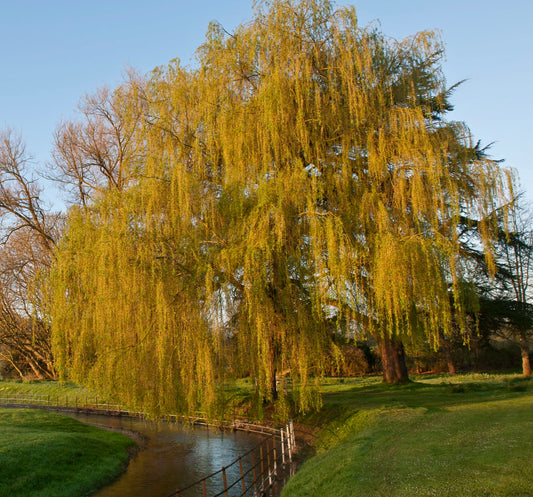
Weeping trees are known for their elegant, drooping branches that bring softness and vertical movement to any garden. Their graceful, pendulous form makes them ideal as focal points in structured or naturalistic landscapes. Whether planted near water features or within minimalist compositions, these trees with draping branches evoke tranquility and balance. The gentle flow of their canopy softens hard lines and creates a poetic rhythm in garden design.

Structure with Movement and Texture

Unlike upright or compact specimens, weeping trees introduce movement through structure. Their flowing foliage and low-hanging limbs interact beautifully with light and wind, adding dynamic texture to still spaces. Suitable as architectural weeping trees or used for softening borders, their forms break monotony and offer contrast to formal shapes. In layered planting schemes, they enhance vertical variety without dominating the visual field.

Perfect for Intimate and Decorative Spaces

In small gardens, decorative weeping trees offer visual drama in a contained footprint. Their downward growth keeps their presence grounded while maintaining ornamental flair. Many small weeping trees are ideal for courtyards, entryways, or as part of mixed perennial beds. Thanks to their controlled silhouette, they integrate easily into tight landscapes while adding a sculptural dimension with their unique shape.

Function and Focal Point in Harmony

Whether planted singly or repeated rhythmically along borders, weeping trees for landscaping serve both decorative and functional roles. Their low-branching canopy can provide light shade, while their trailing structure gently defines space without creating hard divisions. Used near patios or reflecting pools, they create natural curtain-like enclosures. Their weeping habit transforms them into living design elements—everchanging yet harmonious with their surroundings.