Collection: Horridocactus Seeds
Horridocactus Seeds – Spiny continuities of Chilean stone cacti
Botanical identity and origin
Horridocactus Seeds originate from a South American cactus genus within the Cactaceae family, native to arid and semi-arid regions of Chile, often on rocky slopes and coastal ranges. These seeds are small, dark brown to black, and develop within fleshy fruits that ripen close to the plant body. Dispersal is primarily local, aided by gravity, insects, and small animals that move seeds into crevices and mineral soils. Germination is synchronized with mild temperatures and seasonal moisture, reflecting adaptation to Mediterranean desert climates with cool winters and dry summers.
Species diversity and ornamental value
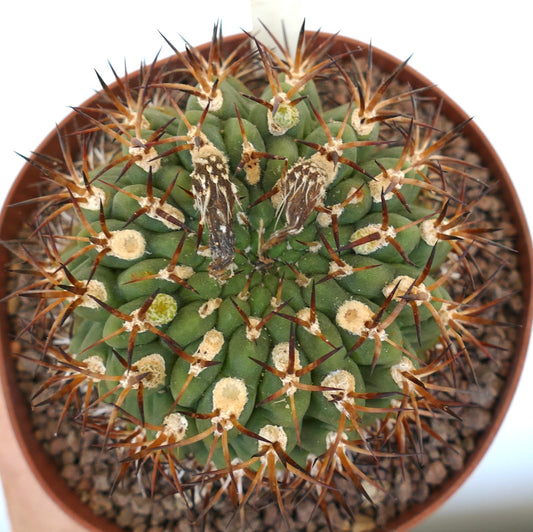
The genetic value preserved within Horridocactus Seeds reflects the compact diversity of the genus. Species such as Horridocactus curvispinus, H. chilensis, and H. horridus produce seedlings that vary in rib structure, spine density, and epidermal coloration. Seed propagation is essential, as vegetative reproduction is limited and often unreliable. For collectors and conservation-oriented cultivation, seed-grown plants offer the most faithful expression of natural forms shaped by geology, altitude, and exposure.
Cultivation and adaptability
Sowing Horridocactus Seeds requires sharply draining, mineral-rich substrates and careful moisture management. Seeds should be placed on the surface or lightly pressed in, as light supports uniform germination. Moderate temperatures and restrained humidity typically induce sprouting within two to three weeks. Seedlings benefit from bright light, excellent airflow, and gradual acclimation to drier conditions. Plants raised from seed develop strong root systems and improved tolerance to cool nights and long dry periods compared to grafted specimens.
Poetic synthesis and symbolism
Within Horridocactus Seeds lies a narrative of defense refined by scarcity. Each seed carries the blueprint for compact bodies armored with formidable spines, shaped by wind, stone, and restraint. Their growth reflects endurance through concentration rather than size. As symbols, these seeds evoke resilience through rigor, reminding us that survival in austere landscapes often depends on precision, patience, and unwavering adaptation.
-
Small dark seeds adapted to localized rocky dispersal
-
Germination aligned with cool-season moisture availability
-
Early root anchorage in mineral, well-drained soils
-
High morphological fidelity preserved through seed propagation