Collection: Haworthia Seeds
Haworthia Seeds – Translucent futures of sheltered succulents
Botanical identity and origin
Haworthia Seeds represent the sexual reproductive stage of a South African succulent genus within the Asphodelaceae family. These seeds are small, angular to slightly flattened, and produced in dry capsules borne on slender flowering stalks. Once mature, capsules split open to release seeds that fall close to the parent plant, settling into leaf litter, sandy soils, and shaded rock crevices. Germination is closely tied to mild temperatures and seasonal moisture, reflecting adaptation to protected microhabitats rather than full desert exposure.
Species diversity and ornamental value
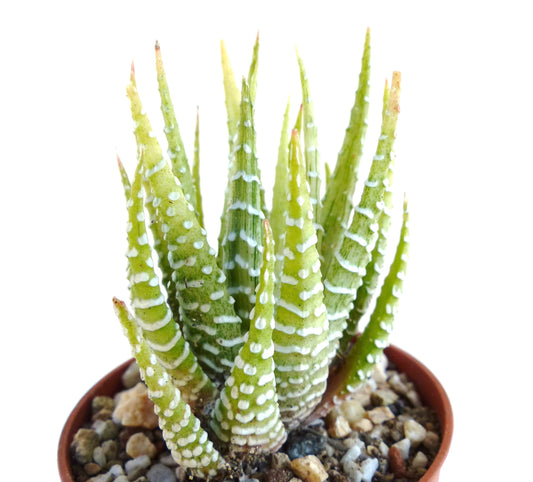
The genetic diversity preserved within Haworthia Seeds reflects the subtle but rich variation of the genus. Species such as Haworthia cooperi, H. retusa, H. attenuata, and H. truncata produce seedlings that differ in leaf translucency, window patterns, rosette compactness, and growth rhythm. Seed propagation is especially important for Haworthia, as vegetative offsets tend to reduce genetic diversity. For collectors and conservation efforts, seed-grown plants reveal authentic forms shaped by locality and microclimate.
Cultivation and adaptability
Sowing Haworthia Seeds requires careful balance of moisture, light, and airflow. Seeds should be placed on finely textured, well-draining substrates and lightly covered or gently pressed in. Moderate moisture and temperatures between 18–24 °C usually induce germination within two to three weeks. Seedlings benefit from bright, indirect light and excellent ventilation, developing compact roots and firm leaves. Plants grown from seed often show improved adaptability and long-term stability compared to offset-grown specimens.
Poetic synthesis and symbolism
Within Haworthia Seeds lies a lesson in restraint and perception. Each seed carries the blueprint for plants that interact with light subtly, filtering it through translucent tissue rather than reflecting it boldly. Their growth favors shelter, patience, and precision. As symbols, these seeds evoke resilience through subtlety, reminding us that survival often thrives not in exposure, but in quiet alignment with shade, rhythm, and place.
-
Small dry-capsule seeds adapted to local dispersal
-
Germination aligned with mild seasonal moisture
-
Slow juvenile growth emphasizing leaf translucence
-
High genetic variation preserved through seed propagation