Collection: Dovyalis
Dovyalis: thorny fruiting shrubs with versatile appeal
Hardy growth and natural resilience
The genus Dovyalis includes vigorous shrubs and small trees known for their dense branching and protective thorns. Species such as caffra and abyssinica thrive in warm climates, producing evergreen foliage and adapting well to dry conditions. Often valued for forming natural hedges, these plants combine ornamental charm with practical utility. Their structure makes them effective as protective barriers while still offering visual interest in managed landscapes and naturalized areas.
Edible fruits with unique flavors
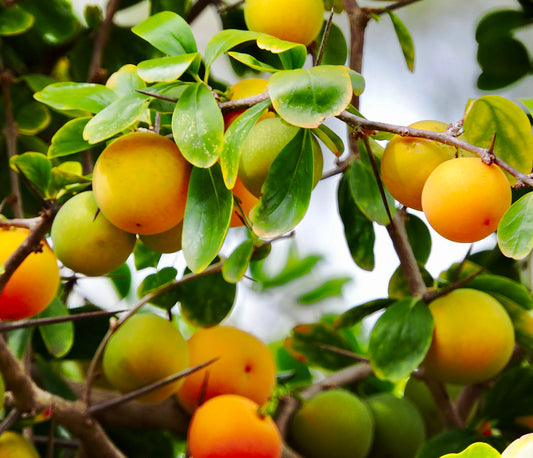
One of the most notable traits of Dovyalis species lies in their fruits. Commonly called caffra kei apple, the tangy berries are rich in vitamin C and enjoyed fresh or in preserves. Other species, such as hebecarpa and zeyheri, produce equally distinctive fruits appreciated in local traditions. Beyond their taste, the nutritional qualities of these wild edibles highlight the genus’ value as both a food source and a cultural resource.
Botanical diversity across species
Within this diverse genus, selections like longispina, macrocalyx, and rhamnoides showcase a variety of growth forms and fruiting habits. Some, like caffra bonsai, even adapt well to container culture, making them suitable for enthusiasts of unusual ornamental trees. From dense caffra hedges to tall fruiting forms, the genus reveals adaptability across landscapes. Such diversity ensures continued interest among botanists, gardeners, and conservationists alike.
Traditional uses and ecological role
In addition to their edible qualities, several species offer notable cultural significance. References to caffra medicinal uses highlight traditional applications that complement their ecological roles. By supporting local wildlife with food and shelter, these shrubs enhance biodiversity while strengthening natural systems. Enthusiasts value them for:
-
Durable hedges that withstand harsh conditions
-
Edible fruits enjoyed fresh or preserved
-
Wildlife support through nectar, pollen, and berries