Collection: Copiapoa megarhiza
Copiapoa megarhiza: A Rare Rooted Cactus of the Chilean Desert
Botanical Identity and Unique Morphology
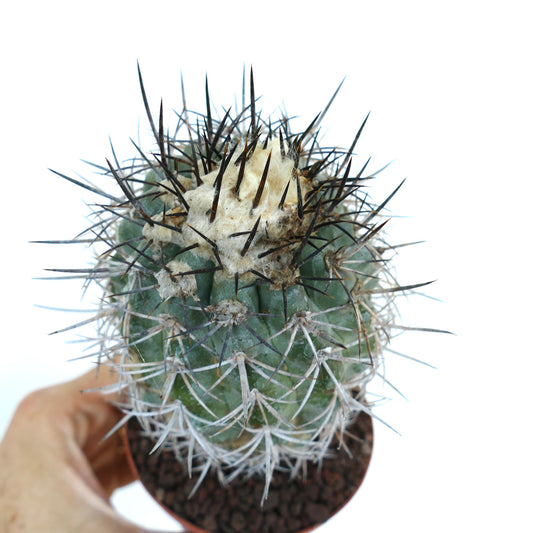
Copiapoa megarhiza stands out in the Copiapoa genus for its distinctive large root system, a key adaptation to the arid landscapes of the Atacama Desert. This rare cactus species is native to Chile and thrives in rocky, mineral-rich soils. Its body is compact and ribbed, typically grey-green, with striking black spines and woolly areoles. The thickened root serves as a water reserve, allowing this desert succulent to survive prolonged droughts—an iconic trait of copiapoa resilience.
Cultivation Requirements and Growth Traits
As a slow growing cactus, Copiapoa megarhiza requires a sandy, fast-draining soil mix to protect its root structure. Full sun exposure is essential for healthy growth and compact form. This sun-tolerant cactus thrives in dry, open environments and should be watered only when the substrate is completely dry. Overwatering is especially harmful due to the sensitivity of its enlarged root. This species is ideal for arid displays, container gardening, and alpine-style cactus collections.
Design Potential and Aesthetic Role
With its sculptural body and robust underground structure, Copiapoa megarhiza offers a blend of strength and subtle elegance. Its visual profile complements minimalist cactus compositions and rugged dry zone cactus landscapes. The unique root structure also contributes to its visual character when partially exposed in transparent or shallow pots. Whether in rock gardens or cactus for collectors setups, it delivers both visual interest and drought-tolerant performance.
Ecological Value and Botanical Significance
Native to high-stress desert ecosystems, Copiapoa megarhiza is a model of botanical adaptation. Its thick rootstock not only conserves water but anchors it in loose, rocky soil. In cultivation, it’s a perfect candidate for eco-conscious gardens that favor succulent cactus with low irrigation demands. Its long lifespan and distinctive look make it a prized specimen in any arid plant collection.


 Sold out