
Secure Payments
Your security comes first. All our payment methods follow PCI standards and support 3D Secure authentication for safe checkout.

Couldn't load pickup availability
Plant Description
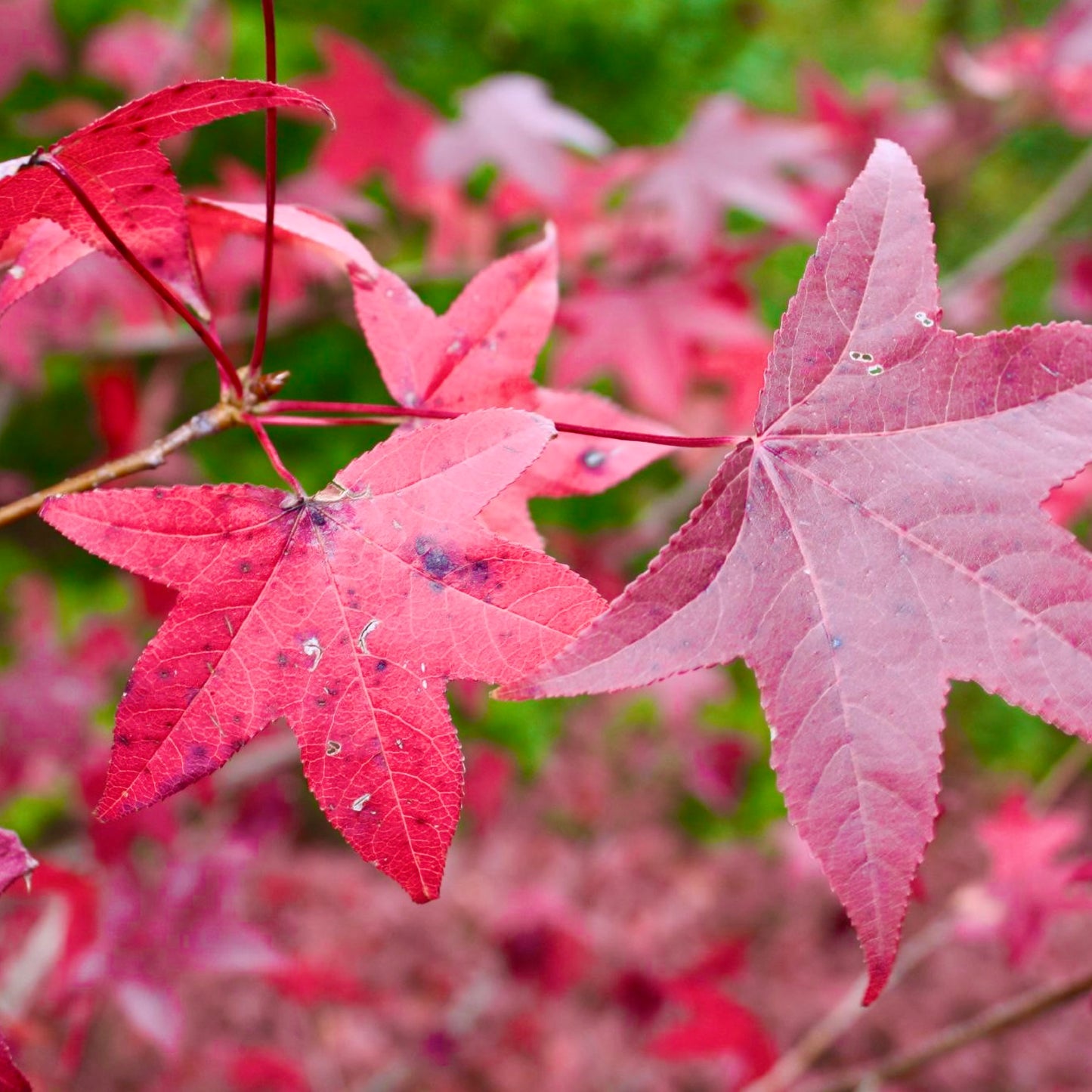
The Liquidambar styraciflua is a striking deciduous tree native to North America. Gardeners admire this species for its distinctive star-shaped leaves, which create a unique silhouette throughout the growing season. The Liquidambar styraciflua tree offers more than just its form; its texture and structure make it a captivating addition to any landscape design.
Known commonly as the American sweetgum or Sweetgum tree, this tree showcases vibrant autumn foliage color. The leaves transition through fiery shades of red, orange, and yellow, providing a spectacular fall display. This North American native thrives in various environments and stands out for its ornamental value. The Liquidambar styraciflua draws attention in both urban and natural settings.
With its combination of elegant form and dramatic seasonal color, the Liquidambar styraciflua remains a favored choice among tree enthusiasts. Its striking autumn foliage color enhances gardens and parks, making it a memorable specimen. This tree's enduring appeal lies in both its botanical traits and its ornamental beauty throughout the year.
IMPORTANT: The pictures show the mother plant, which is not for sale. The offer includes a plant with the dimensions stated in the description.
Botanical family: Altingiaceae
Botanical genus: Liquidambar
Botanical species: Liquidambar styraciflua
SKU:BA-0768-S-1
• Soil type: Prefers moist, well-drained soils, but tolerates sandy, loamy, or clay soils.
• Watering frequency: Water regularly during establishment; drought-tolerant once mature.
• Light exposure: Thrives in full sun for the best fall color but tolerates partial shade.
• Temperature requirements: Hardy and adaptable, tolerating temperatures from -25°C to 35°C (-13°F to 95°F).
• Fertilization: Apply a balanced fertilizer in spring to support growth and enhance foliage.
• Pruning: Prune in winter to shape or remove deadwood. Minimal pruning is usually sufficient.
• Common pests: Generally pest-resistant; occasionally affected by webworms, leaf spots, or scale insects.
• Other tips: Consider its large size and spiky seed pods when planting near paths or structures.
Plant Height:
Plant Diameter:
Pot Size:
Grafted/Not Grafted:
Disclaimer: Be aware that most plants change across seasons. If present foliage, could have been fallen or change in its color.
Your security comes first. All our payment methods follow PCI standards and support 3D Secure authentication for safe checkout.
Our customer support is available Monday to Saturday from 9:00 AM to 6:00 PM (European time).
Our products travel in professional, eco-friendly packaging made from recycled materials, ensuring safe delivery.
We ship worldwide with full tracking. A Phytosanitary Certificate is provided for all exports outside the EU.