
Secure Payments
Your security comes first. All our payment methods follow PCI standards and support 3D Secure authentication for safe checkout.


Couldn't load pickup availability
Plant Description
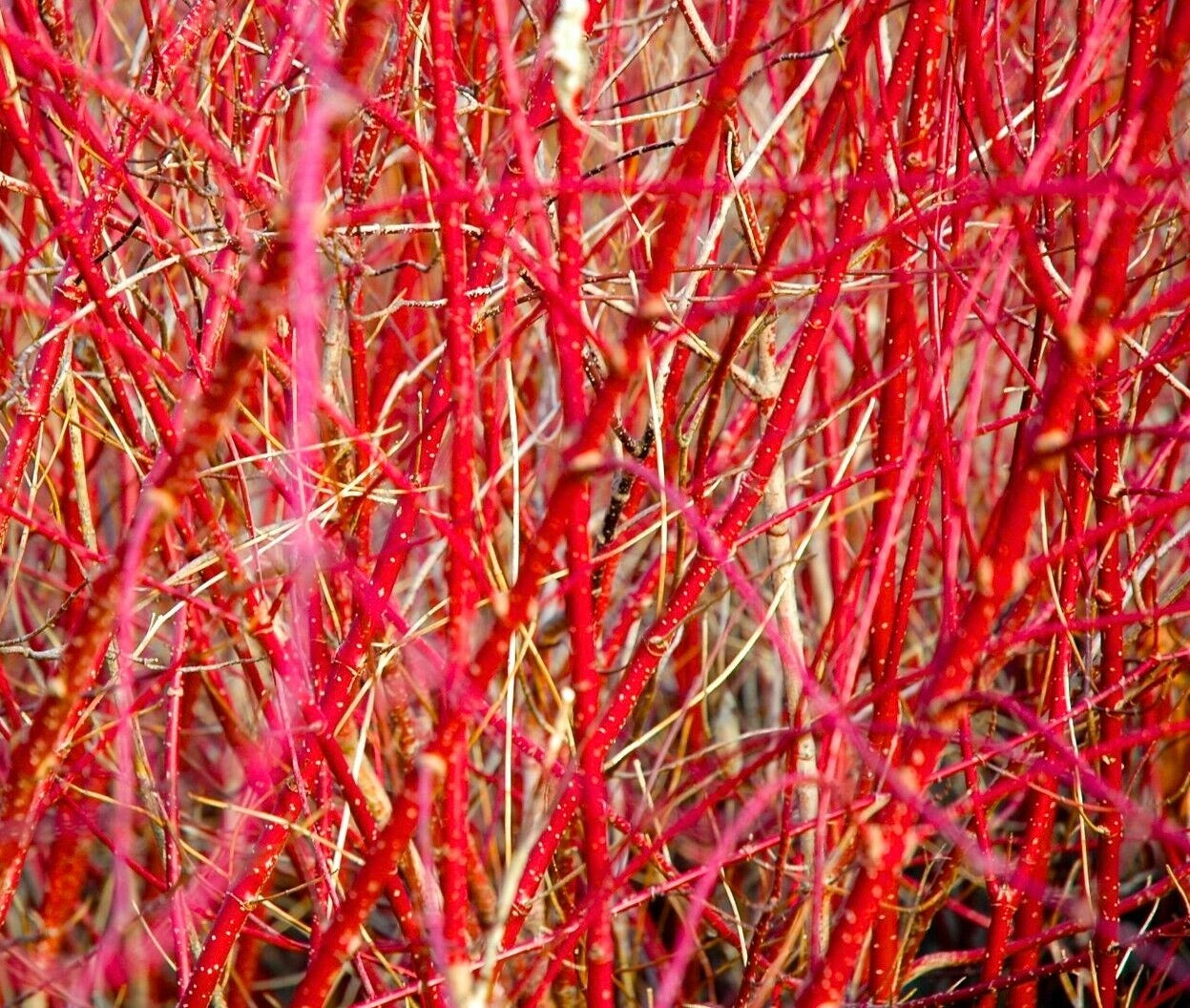
Cornus sanguinea, commonly known as common dogwood or bloodtwig dogwood, is a highly adaptable deciduous shrub native to much of Europe and western Asia. Celebrated for its seasonal transformations, it grows between 2 to 5 meters tall, forming dense, thicket-like structures ideal for naturalistic landscapes and hedgerows. Its oval, dark green leaves develop stunning red, purple, or burgundy tones in autumn, providing a fiery display before dropping to reveal the plant’s most iconic feature—its vivid red to purplish young stems that glow in winter light. In late spring to early summer, flat-topped clusters of creamy white flowers appear, subtly fragrant and highly attractive to bees and butterflies. These are followed by small, blackish-purple berries that ripen in autumn, much loved by birds but mildly toxic to humans. The rich coloration of its twigs, especially in winter, makes Cornus sanguinea a standout in mixed borders or mass plantings. It is prized for its wildlife value, erosion control potential, and ease of care, and is often used in reforestation, bioengineering, and cold-climate gardens for both structure and color year-round.
IMPORTANT: Please be aware that pictures show adult plant not for sale, the offer is for a plant in the dimension indicated in title description.
Botanical family: Cornaceae
Botanical genus: Cornus
Botanical species: Cornus sanguinea
SKU:BA-8295-S
Soil type: Tolerates a wide range of soils including clay, loam, and chalk; prefers moist but well-drained soil.
Watering frequency: Water regularly during establishment; mature plants tolerate moderate drought but thrive with consistent moisture.
Light exposure: Grows well in full sun to partial shade; brighter stem color develops with more sun exposure.
Temperature requirements: Performs best in 5°C–28°C (41°F–82°F); withstands cold winters down to -20°C (-4°F).
Fertilization: Requires little feeding; apply compost or slow-release fertilizer in early spring if soil is poor.
Pruning: Hard prune in late winter or early spring to encourage vivid stem growth; remove 1/3 of old stems annually for best color.
Common pests: Few significant pests; may occasionally suffer from leaf spot or aphids.
Other care practices: Excellent for mixed hedges, natural screens, or erosion control on slopes; tolerant of air pollution and urban conditions.
Plant Height:
Plant Diameter:
Pot Size:
Grafted/Not Grafted:
Disclaimer: Be aware that most plants change across seasons. If present foliage, could have been fallen or change in its color.

Your security comes first. All our payment methods follow PCI standards and support 3D Secure authentication for safe checkout.
Our customer support is available Monday to Saturday from 9:00 AM to 6:00 PM (European time).
Our products travel in professional, eco-friendly packaging made from recycled materials, ensuring safe delivery.
We ship worldwide with full tracking. A Phytosanitary Certificate is provided for all exports outside the EU.