
Leuchtenbergia
-
Leuchtenbergia principis OLD PLANT 646
Regular price €27,00 EURRegular price -
Leuchtenbergia principis OLD PLANT 866
Regular price €25,00 EURRegular price -
Leuchtenbergia principis OLD PLANT more then 60 years
Regular price €80,00 EURRegular price -
Leuchtenbergia principis OLD PLANT RE7
Regular price €25,00 EURRegular price -
Leuchtenbergia principis OLD SPECIMENT 75MFQ
Regular price €25,00 EURRegular price -
Leuchtenbergia principis VERY OLD OWN ROOTS (ex-private collection)
Regular price €55,00 EURRegular price

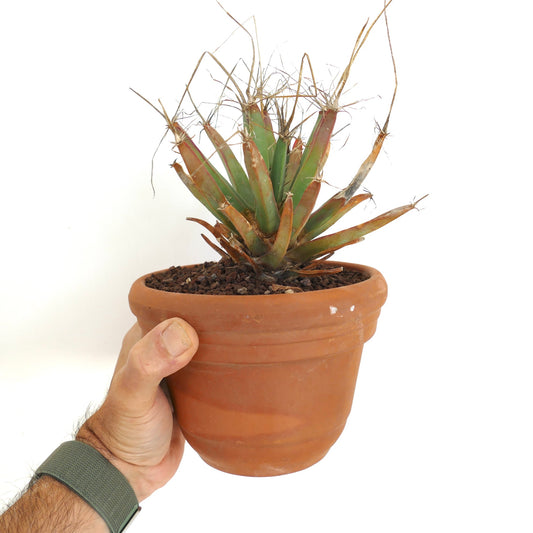

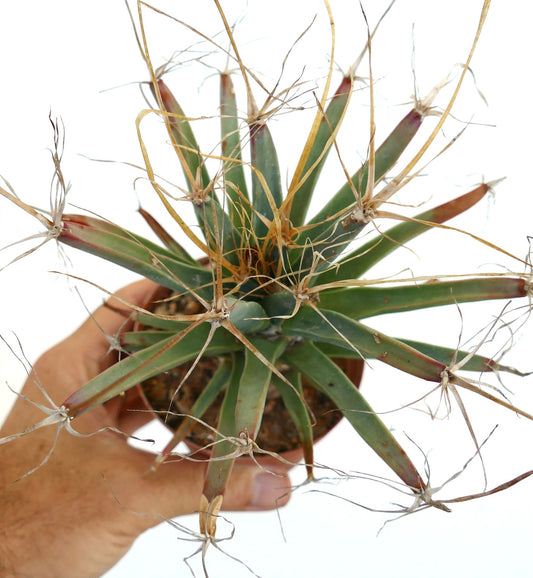

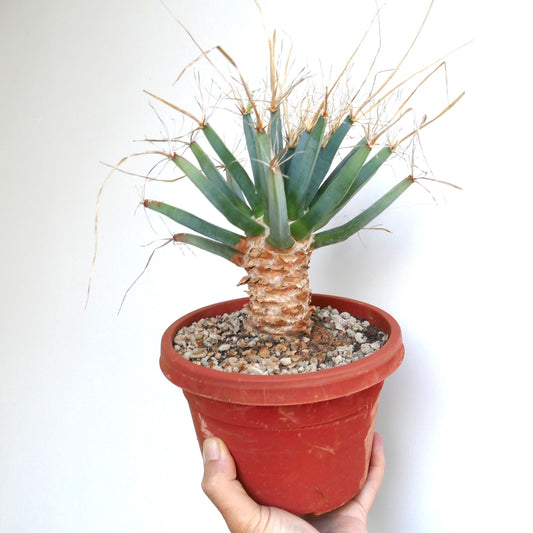

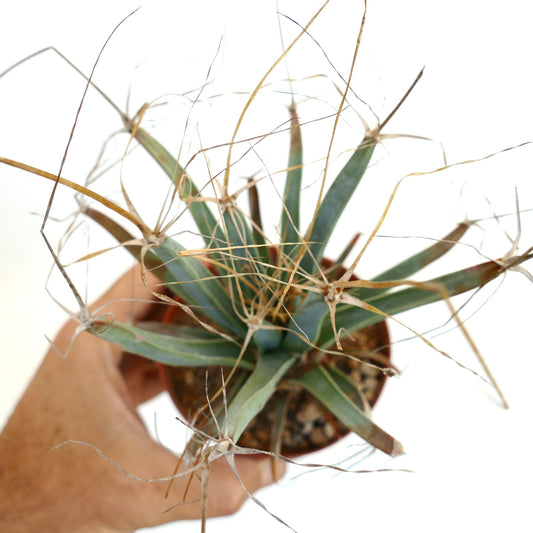


Collection: Leuchtenbergia
Leuchtenbergia: The Agave-Like Cactus
Leuchtenbergia, commonly known as Leuchtenbergia Principis, is a unique cactus species that resembles an agave plant.
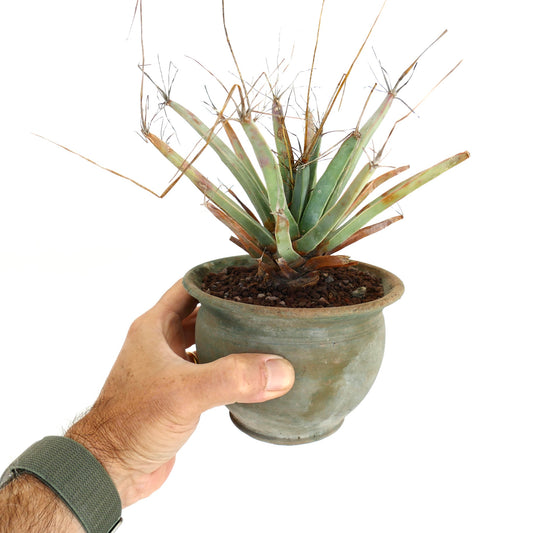
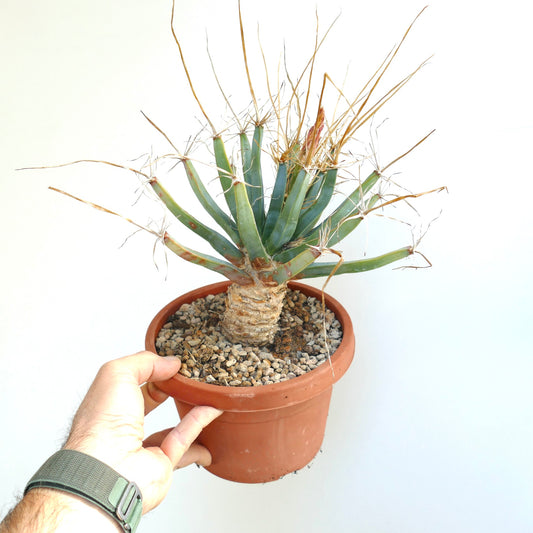
This rare and visually arresting species is the sole representative of its genus, making Leuchtenbergia a true botanical curiosity. Native to the arid zones of central and northern Mexico, it grows slowly and forms a solitary stem that, over many years, may become slightly woody at the base. The plant’s surface is composed of long, narrow, spiky tubercles that are triangular in cross-section and arranged in a spiral around the stem—features that give it a distinctly agave-like appearance despite its cactus lineage. These tubercles often develop reddish or brownish tips and bear papery spines at their ends, enhancing the plant’s sculptural appeal. Mature specimens resemble abstract, desert-dwelling stars, combining hard geometry with an austere elegance. Revered by cactus collectors and succulent enthusiasts, Leuchtenbergia Principis offers not only rarity but also a form that feels at once prehistoric and modern—a truly standout species for those who appreciate desert plants with unusual morphology.

The Distinctive Features of Leuchtenbergia Principis
The Leuchtenbergia Principis stands out with its long, triangular tubercles that mimic agave leaves. Each tubercle can reach up to 15 cm in length and is arranged in a whorled pattern that radiates outward, giving the plant its rosette-like structure. Despite its appearance, Leuchtenbergia is a true cactus, complete with areoles and papery spines—an evolutionary marvel that visually bridges the gap between succulents and cacti. One of its most captivating traits is its ability to produce vibrant yellow flowers, often with a hint of red at the base, which emerge from the plant’s apex in summer. These blooms are surprisingly large compared to the overall size of the plant and emit a soft fragrance, adding to its ornamental value. As a slow grower, it’s particularly suited to container culture, rock gardens, or specimen displays, where its intricate form and coloration can be fully appreciated. It performs best in well-draining soil with a high mineral content, such as pumice or coarse sand, and thrives under full sunlight, which encourages tight, compact growth and deeper pigmentation.

Caring for Leuchtenbergia Cactus
Caring for a Leuchtenbergia cactus is straightforward. Water sparingly, allowing the soil to dry completely between waterings. As a desert-adapted species, it is highly susceptible to root rot if overwatered, so it is crucial to use a fast-draining cactus substrate and avoid excess humidity. During the active growing season (typically spring to early fall), provide light but regular watering—roughly every 2–3 weeks depending on climate—and always ensure that the potting mix dries thoroughly in between. In winter, when the plant enters dormancy, withhold watering altogether. Regular fertilization with a diluted, low-nitrogen cactus fertilizer every 4–6 weeks during the growing season supports healthy tubercle development and encourages flowering. This species prefers warm, sunny environments and can be grown outdoors in hot climates or indoors on a bright windowsill or under grow lights. It is relatively pest-resistant, though mealybugs may occasionally appear near the areoles or roots. With minimal intervention, Leuchtenbergia becomes an easy-care showpiece, combining visual drama with long-term durability.

Leuchtenbergia’s Unique Appeal
The Leuchtenbergia Principis agave cactus is valued for its drought tolerance and adaptability. Its unusual morphology makes it highly desirable for collectors looking to diversify their cactus assemblages with something truly different. Because it resembles an agave or yucca more than a typical cactus, it brings variety and sculptural interest to mixed succulent arrangements. It pairs beautifully with columnar cacti, globular species, or even contrasting forms like Haworthia and Aloe. Its extreme drought tolerance and preference for neglect make it ideal for xeriscaping, container gardens, and arid-themed designs where water conservation is key. Whether used as a focal point or integrated into a themed display, Leuchtenbergia Principis offers both botanical uniqueness and horticultural resilience. Its slow growth also makes it suitable for long-term indoor cultivation, where its evolving form and textural complexity provide lasting aesthetic intrigue. For those seeking something rare yet reliable, Leuchtenbergia is a natural choice.
Other Collections in the Archive
-

Specimen Plants
Specimen Plants in our Store Specimen Plants captivate plant enthusiasts with their...
-
Catalogue Plants
Catalogue plants provide a wide variety of options to elevate your garden...
-
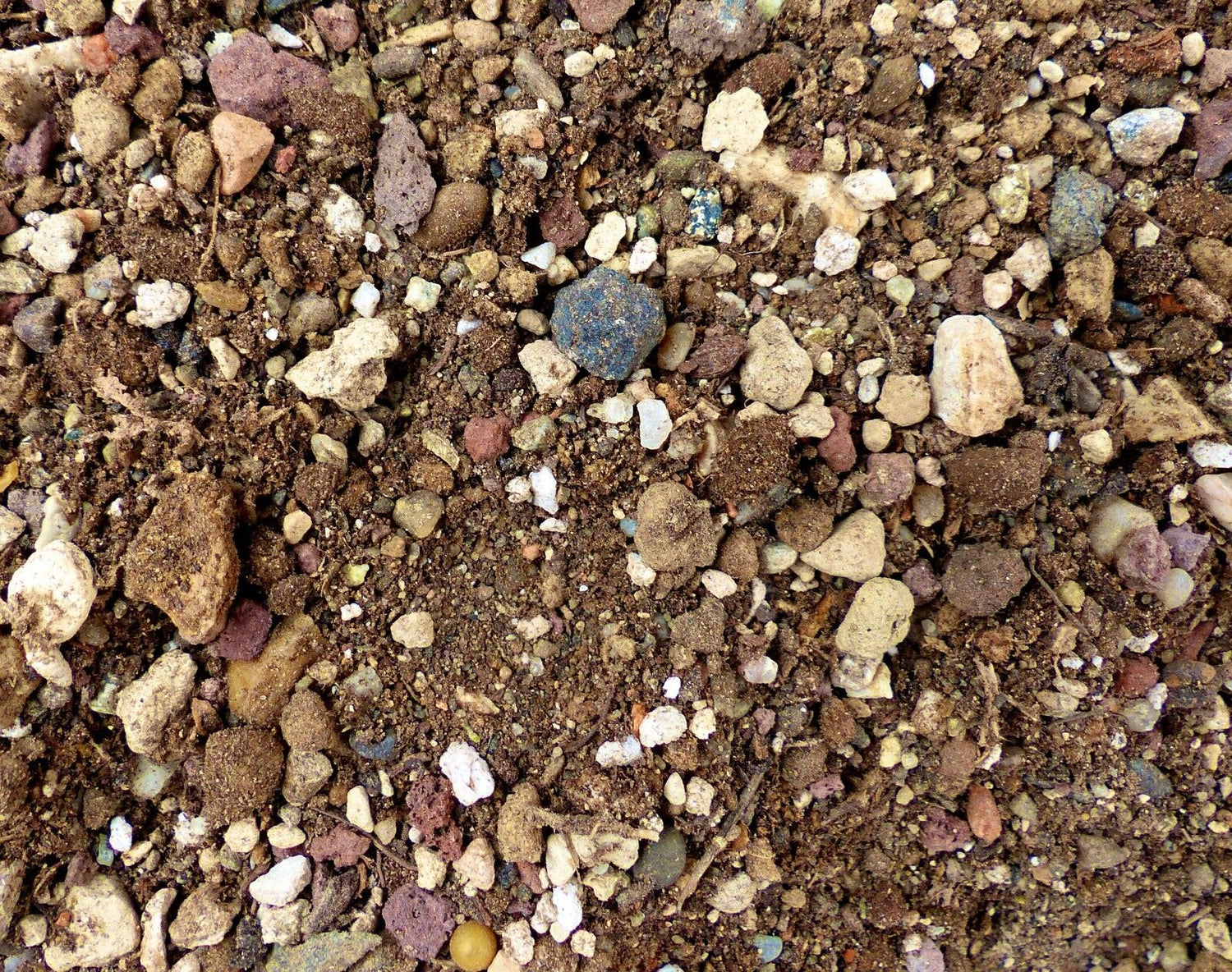
Gardening Tools & Soils
Gardening tools – essentials for healthy soils and thriving plants Building a...


